EN
EN

If you work with electrical systems or industrial equipment, being able to break down a combination DC circuit is a core skill. This guide gives clear, practical steps to analyze mixed series–parallel networks and shows how proper protection keeps systems safe and reliable.
Combination DC circuits include both series and parallel elements, which makes their behavior less obvious than simple circuits. Engineers and technicians often struggle with identifying sections, finding equivalent resistances, and choosing the right protection. Below we cover core concepts, analysis techniques, essential formulas, troubleshooting tips, and why the correct industrial protection matters.
Because DC behavior is steady and predictable, instructors and engineers often use DC circuits first to teach and verify fundamentals before moving to more complex systems.
DC Circuit Fundamentals: Concepts & Practical Applications
Circuit analysis is fundamental to designing and understanding electrical equipment. Over time, a variety of methods have been developed to calculate voltages, currents, and power for each circuit element. While those methods apply under many excitation conditions, beginners benefit most from starting with DC circuits where voltages and currents are time-invariant. Direct current simplifies the math and highlights core ideas — which is why many battery-powered designs and initial teaching examples use DC circuits as practical illustrations of circuit analysis.
DC Circuit Analysis, TA Bigelow, 2020
What Is a Combination DC Circuit and Why Is Its Analysis Important?
A combination DC circuit mixes series and parallel components to meet specific performance and reliability goals. Correct analysis is critical: it helps you predict voltages and currents, size protection devices, and avoid failures. In industrial contexts, that means fewer unexpected outages and safer equipment operation.
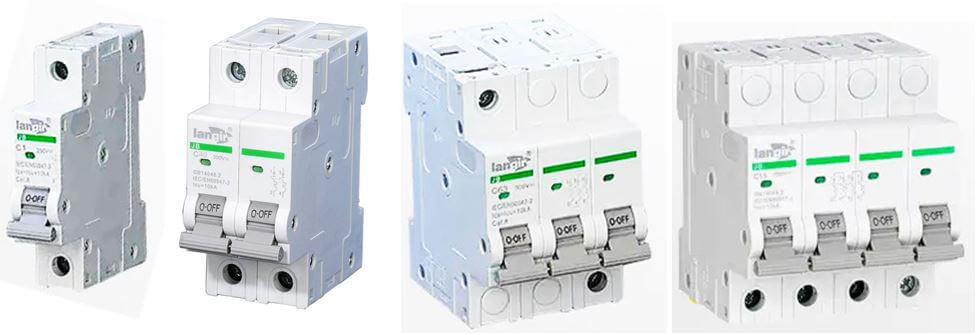
Get a quote for custom DC circuit breakers from Langir
How Do Series and Parallel Circuits Form Combination DC Circuits?
Series and parallel connections are the building blocks. In series, components sit end-to-end so the same current flows through each element. In parallel, components share the same voltage but carry different currents. Combination circuits are simply networks that use both arrangements — for example, a string of resistors in series feeding a parallel branch. Drawing a clear schematic makes it much easier to spot those sections.
Visual diagrams and schematics are especially helpful when you map nodes, junctions, and loops for analysis.
What Are the Key Electrical Properties in Combination DC Circuits?
The primary quantities to track are voltage, current, and resistance. Voltage (V) drives current (I) through the circuit, and resistance (R), measured in ohms, limits that current. How these three interact determines power distribution and component stresses — the values you need to check when designing or troubleshooting a circuit.
Mastering these relationships is the foundation of reliable circuit design and diagnosis.
How to Analyze Combination DC Circuits: Step-by-Step Breakdown Methods
Systematic analysis reduces mistakes. Break the network into recognizable series and parallel groups, calculate equivalent resistances where possible, and simplify the circuit step by step until you can apply Ohm’s and Kirchhoff’s rules to the remaining network.
How Do You Identify Series and Parallel Sections in a DC Circuit?
Start at a single node and follow the wiring. Components that share the same single path for current are in series; components that connect to the same two nodes and therefore share voltage are in parallel. If the configuration is ambiguous, label nodes and redraw the schematic. Simple measurements with a multimeter — checking continuity and voltage at key points — also confirm your identification.
How to Calculate Equivalent Resistance in Series and Parallel Parts?
Reducing the circuit into equivalent resistances simplifies further analysis. For series connections, add resistances directly. For parallel groups, use the reciprocal formula to find the combined resistance, then replace the group with its equivalent.
For example, the equivalent resistance in parallel can be calculated using the formula:
Working through these reductions stepwise makes it easier to compute currents and voltage drops under load.
Which Formulas and Laws Are Essential for DC Combination Circuit Analysis?
Two foundational tools are Ohm’s Law and Kirchhoff’s Laws. Together they let you relate voltages, currents, and resistances across any network and solve for unknowns in multi-branch circuits.
How Is Ohm’s Law Applied to Combination DC Circuits?
Ohm’s Law links voltage, current, and resistance with a simple equation:
Use it to calculate current through a resistor, the voltage drop across a component, or the resistance needed for a target current. Apply the law at each stage after you simplify the circuit.
How Do Kirchhoff’s Laws Help Solve Complex DC Circuits?
Kirchhoff’s Current Law (KCL) states that currents entering a node equal currents leaving it; Kirchhoff’s Voltage Law (KVL) states that the sum of voltage changes around any closed loop is zero. Use KCL to write node equations for multi-branch points, and KVL to write loop equations — together they let you solve networks that aren’t reducible by simple series/parallel rules.
How to Troubleshoot Complex Combination DC Circuits Effectively?
Troubleshooting is best done methodically: isolate sections, confirm expected voltages and currents, and swap or simulate suspect components. Reliable troubleshooting minimizes downtime and prevents repeated faults.
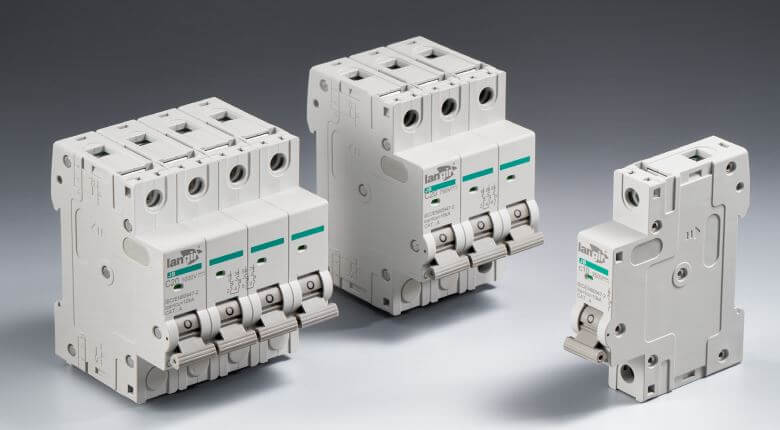
Get a quote for custom DC circuit breakers from Langir
What Are Common Issues in Industrial DC Circuits?
Typical problems include shorts (unwanted low-resistance paths), opens (broken connections), and component failures. Shorts produce excessive current and heat; opens stop current flow. Identifying which of these is present quickly narrows your search for the root cause.
How Can You Use Circuit Breakers and Switches to Identify Faults?
Circuit breakers and switches let you systematically isolate circuit segments. By opening or closing specific breakers and observing which sections lose power, you can pinpoint faulty branches. This approach is safer than probing live networks without isolation and speeds up diagnosis.
Why Is Industrial DC Circuit Protection Critical for Combination Circuits?
Proper protection prevents damage to equipment and reduces safety risks. Overcurrent protection, correct interrupting devices, and appropriately rated components all protect against short circuits, overloads, and cascading failures in mixed-series/parallel systems.
How Do Langir’s DC Circuit Breakers Safeguard Combination Circuits?
Langir’s DC circuit breakers detect overcurrent conditions and interrupt fault currents before they damage equipment. Designed for industrial use, these breakers help minimize downtime and repair costs while keeping installations compliant and safe.
What Push Button Switches Enhance Control in Industrial DC Systems?
Push button switches give operators simple, reliable control for starting, stopping, or resetting equipment. Langir’s push buttons are built for repeated use in harsh industrial environments, combining clear actuation with durable construction so controls remain dependable over long service life.
How to Choose and Customize DC Circuit Protection Solutions for Industrial Applications?
Selecting the right protection requires matching device ratings and environmental tolerances to your application. Consider voltage and current ratings, interrupting capacity, ambient conditions, and maintenance needs when choosing breakers or switches.
What Factors Influence the Selection of DC Circuit Breakers and Switches?
Key selection factors include nominal voltage, continuous current rating, trip characteristics, and the physical environment (temperature, humidity, vibration). Knowing the load profile and any startup inrush currents also ensures you pick devices that protect without nuisance tripping.
How Does Langir Support Bulk Orders and Customization for Industrial Needs?
Langir supports bulk orders and customization, helping businesses specify product variants, labels, packaging, and delivery schedules. Our team works with customers to match product configurations to application requirements while offering competitive lead times and support.
How to Break Down a Combination DC Circuit | FAQs

Get a quote for custom DC circuit breakers from Langir
What are the safety considerations when working with combination DC circuits?
Safety comes first. De-energize circuits before working on them and verify zero energy with a meter. Use appropriate PPE (insulated gloves, eye protection) and follow lockout/tagout procedures. Be mindful of stored energy in capacitors and always review the circuit schematic before testing or repairs.
How can I improve the efficiency of a combination DC circuit?
Improve efficiency by using properly rated components, minimizing unnecessary wiring length, and reducing resistive losses. Choose components with low power dissipation where possible and perform regular maintenance to keep connections tight and corrosion-free.
What tools are essential for analyzing combination DC circuits?
Essential tools include a reliable multimeter for voltage/current/resistance checks, an oscilloscope for observing signal behavior, and circuit simulation software for modeling complex networks. Hand tools (wire strippers, soldering iron) and clear schematics complete a practical toolkit.
What role do fuses play in DC circuit protection?
Fuses provide simple, fast overcurrent protection by melting a fusible element when current exceeds its rating. They protect wiring and components from overheating. Selecting the correct fuse type and rating for the specific circuit is critical to ensure reliable protection without nuisance blows.
How can I troubleshoot intermittent issues in DC circuits?
For intermittent faults, start with a visual inspection for loose or corroded connections, then monitor voltages and currents under the conditions when the fault appears. Logging tools and an oscilloscope can capture transient events. Document the conditions and replicate them in a controlled way to isolate the problem.
What are the benefits of using digital circuit testers for DC circuits?
Digital testers deliver accurate, repeatable readings for voltage, current, and resistance. Features like data logging and auto-ranging help track intermittent issues and speed diagnostics. Clear displays and built-in safety features make them valuable for both bench testing and field troubleshooting.
Conclusion
Understanding how to analyze combination DC circuits is essential for safe, efficient industrial systems. By applying series/parallel reduction, Ohm’s and Kirchhoff’s Laws, and a structured troubleshooting process, you can design and maintain reliable circuits. Pairing that knowledge with correctly specified protection — such as Langir’s breakers and controls — reduces risk and keeps operations running smoothly. Explore our industrial protection products to find solutions tailored to your projects.
 EN
EN  FR
FR  PL
PL  PT
PT  ES
ES  JA
JA  RU
RU  AR
AR  IT
IT  NL
NL  TR
TR  KO
KO  DE
DE