EN
EN

Sizing the right circuit breaker for a DC circuit is essential to protect equipment and keep systems running reliably. This guide walks you through the principles that matter for DC breaker selection: DC fundamentals, the parameters that drive ratings, and clear, step‑by‑step calculation methods. Many installers and designers struggle with choosing the correct breaker, which can cause nuisance trips or, worse, equipment damage. Follow this guide to determine accurate breaker ratings for common use cases — from solar arrays and battery banks to demanding industrial loads — and learn how Langir Electric’s JB Series meets those needs.
What Are the Fundamentals of DC Circuits and Circuit Breakers?
Knowing how DC circuits behave is the foundation of correct breaker sizing. Direct current flows in a single direction, which changes how faults and interruptions behave compared with AC circuits. Circuit breakers are protective devices that stop excessive current during overloads or shorts to prevent component damage, fires, and unsafe conditions.
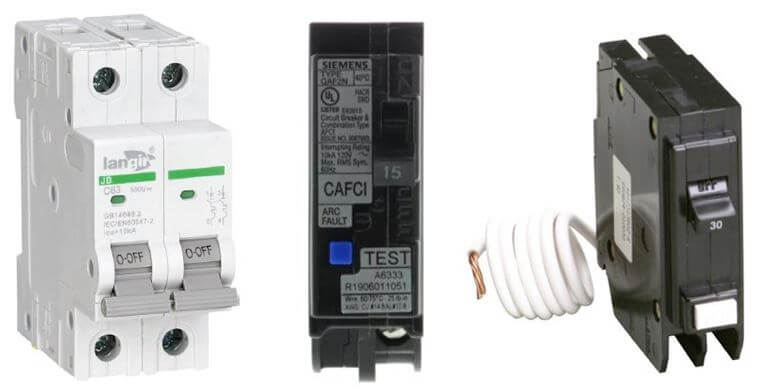
Get a quote for custom DC circuit breakers from Langir
What Is a DC Circuit Breaker and How Does It Differ from AC Breakers?
A DC circuit breaker is engineered for the continuous, one‑direction current characteristic of DC systems. Because DC lacks the zero‑crossing that helps AC breakers extinguish arcs, DC breakers use stronger arc‑quenching and dedicated trip mechanisms — magnetic, electronic, or hybrid designs — to interrupt current safely. Typical applications include renewable energy systems, battery storage, and electric vehicles where reliable DC protection is critical.
Which Basic Electrical Principles Affect DC Circuit Breaker Sizing?
Several core electrical principles inform breaker sizing. Ohm’s Law (V = I × R) lets you relate voltage, current and resistance when determining expected currents. Power relationships (P = V × I) and the system’s operating voltage also affect current levels and component selection. Applying these fundamentals ensures the selected breaker will carry normal load without nuisance trips while still clearing faults effectively.
What Key Parameters Influence DC Circuit Breaker Rating Calculations?
Breaker ratings rely on a set of measurable parameters: the expected load current, the system voltage, the maximum possible short‑circuit current, and the breaker’s breaking capacity. Each parameter contributes to safe, reliable operation and must be verified during design and procurement.
How Do Load Current and Continuous Load Factor Determine Breaker Size?
Load current is the current the circuit will carry during regular operation. Because some loads run continuously, designers apply a continuous load factor — a safety multiplier — to avoid nuisance trips and overheating. Multiply the expected load current by the continuous load factor to establish the minimum breaker rating that will reliably carry the load.
Why Are Voltage Rating, Short Circuit Current, and Breaking Capacity Critical?
The voltage rating shows the maximum system voltage the breaker can safely interrupt. Short‑circuit current is the highest current that could flow during a fault, and breaking capacity (or interrupting rating) is the maximum fault current the breaker can safely interrupt. Selecting a breaker with an appropriate voltage rating and breaking capacity is essential to avoid equipment damage or failure during fault conditions.
How to Calculate DC Circuit Breaker Size: Step-by-Step Formulas and Examples
Use a straightforward, methodical approach when calculating breaker size. The following steps and examples make the process repeatable across applications.
What Is the General Formula for DC Circuit Breaker Sizing?
The general sizing rule is:
This gives the minimum breaker rating to carry the load under normal operating conditions. Typical continuous load factors range from 1.25 to 1.5 depending on the application and code requirements.
How to Calculate Breaker Rating for Solar PV, Battery Banks, and Industrial Loads?
Specific applications call for small adjustments to the basic formula. For example, for a solar PV string you should size the breaker for the panel’s maximum output current plus a safety margin:
This accounts for peak production and prevents nuisance trips during maximum insolation. For battery banks, size the breaker to handle maximum continuous and peak discharge currents. For industrial loads, include startup and inrush currents in your load current estimate before applying the continuous load factor.
Which Selection Criteria Should Guide Choosing the Right DC Circuit Breaker?
Choose a breaker based on the application’s electrical and environmental demands. Key criteria include the breaker’s trip characteristics, pole configuration, environmental ratings, and compliance with relevant codes and standards.

Get a quote for custom DC circuit breakers from Langir
How Do Trip Curves, Number of Poles, and Environmental Factors Affect Selection?
Trip curves describe the time‑current response of a breaker and help you match protection to the load’s normal and fault behavior. The number of poles depends on the circuit layout — single‑pole for many DC systems, multi‑pole for multi‑conductor or multi‑string setups. Environmental conditions such as ambient temperature, humidity, dust, or corrosive atmospheres affect thermal performance and long‑term reliability, so select breakers rated for the environment where they’ll be installed.
What Are the NEC and International Standards for DC Circuit Breaker Compliance?
National and international codes — including the NEC and IEC standards — set minimum safety and installation requirements. These standards guide correct breaker sizing, installation methods, and labeling so systems meet legal and safety expectations. Always verify local code requirements and applicable standards during design and procurement.
What Are the Features and Benefits of Langir JB Series DC Circuit Breakers?
Langir’s JB Series is built to deliver dependable protection and flexible installation across DC applications. The series combines reliable trip mechanisms, compact form factors, and ratings suitable for renewable, storage, and industrial systems.
How Does the JB Series Provide Reliable Protection and Bidirectional Current Flow?
JB Series breakers include robust overload and short‑circuit protection and are designed to support bidirectional current flow — a key requirement for systems like solar + storage where current can reverse during charging and discharging. That bidirectional capability, together with consistent trip performance, makes JB Series ideal for modern DC systems.
What Customization Options Does Langir Offer for DC Circuit Breakers?
Langir Electric provides customization to match specific system needs. Options include tailored voltage ratings, higher breaking capacities, and modified trip characteristics so the breaker aligns with unique system requirements and operational profiles. Custom configurations are especially useful for specialized industrial or large renewable projects.
What Common Questions Arise About DC Circuit Breaker Sizing and Selection?
Below are concise answers to frequent design and selection questions that come up during system planning and installation.
How Do You Calculate DC Circuit Breaker Size Using the 125 Percent Rule?
The 125 percent rule is a common guideline for continuous loads: multiply the continuous load current by 1.25 to determine the breaker rating. This built‑in margin helps prevent nuisance tripping and allows safe, continuous operation.
How Do NEC Requirements Impact DC Circuit Breaker Selection?
NEC rules define minimum sizing practices, installation methods, and labeling for safety and code compliance. NEC requirements often dictate the continuous load multipliers, wiring limits, and protective device placement; follow them to ensure installations are safe and meet inspection criteria.
How to Calculate DC Circuit Breaker Ratings | FAQs

Get a quote for custom DC circuit breakers from Langir
What is the importance of selecting the right continuous load factor?
The continuous load factor gives a safety margin for sustained operation. Using a multiplier—commonly 1.25 to 1.5—accounts for sustained loads and minor fluctuations, reducing nuisance trips and preventing overheating. Choosing the correct factor improves reliability and protects both the breaker and connected equipment.
How can environmental conditions affect DC circuit breaker performance?
Ambient conditions influence breaker thermal performance and long‑term reliability. High temperature raises internal temperatures and can lower allowable current ratings; moisture and corrosives can harm contacts and housings. Always select breakers with environmental ratings and derating guidance appropriate for the installation.
What are the common applications for DC circuit breakers?
DC breakers are used widely in solar PV systems, battery energy storage, electric vehicles, telecom power systems, and certain industrial machinery. Wherever DC power is present, appropriate protection is required to safeguard equipment and personnel.
How do you determine the breaking capacity needed for a DC circuit breaker?
Calculate the maximum prospective short‑circuit current at the breaker location based on system impedance and fault scenarios. Select a breaker whose breaking capacity exceeds that calculated value so it can interrupt the fault without sustaining damage.
What role do trip curves play in circuit breaker selection?
Trip curves show how long the breaker takes to open at various overcurrent levels. Matching the trip curve to the load profile avoids nuisance trips from inrush currents while ensuring fast clearing of dangerous faults. Choose a curve that balances protection and operational tolerance for your specific load.
Can DC circuit breakers be used in AC applications?
DC breakers are designed specifically for direct current and are not interchangeable with AC breakers in most cases. AC breakers rely on current zero‑crossing for arc extinction; using a DC breaker in AC service—or vice versa—can result in inadequate protection. Always use the type specified for the circuit.
Conclusion
Correctly calculating DC breaker ratings protects equipment, improves uptime, and keeps installations safe. By focusing on load current, voltage, short‑circuit currents, and breaking capacity — and by following applicable codes — you can select breakers that perform reliably. For tailored solutions, explore Langir’s resources or contact our team to match JB Series breakers to your system requirements. Start optimizing your DC systems for safer, more efficient operation today.
 EN
EN  FR
FR  PL
PL  PT
PT  ES
ES  JA
JA  RU
RU  AR
AR  IT
IT  NL
NL  TR
TR  KO
KO  DE
DE