EN
EN

Choosing the right size for a DC circuit breaker is a safety and performance decision — especially in solar photovoltaic (PV) and industrial setups. This guide lays out the key principles, the electrical parameters you must check, and real-world considerations for sizing breakers correctly. Get the sizing basics right and you reduce equipment risk, prevent downtime, and stay aligned with safety codes. Below we explain what a DC breaker does, which numbers matter, application-specific tips, and installation and maintenance best practices. We also highlight how Langir’s product choices, including the JB Series, support reliable circuit protection.
Research supports using a clear, stepwise method to determine optimal DCCB parameters.
Systematic approach to DC circuit breaker sizing
This study presents a structured method for sizing DC circuit breakers, outlining a practical process to determine the optimal DCCB parameters. It also shows that sizing line inductors should be coordinated with the DC-FRTS requirements.
Systematic approach to HVDC circuit breaker sizing, M Abedrabbo, 2019
What is a DC circuit breaker — and why correct sizing matters
A DC circuit breaker interrupts direct current when a fault or overload occurs. Correct sizing ensures the breaker protects equipment without nuisance trips and that it will clear faults reliably. A mis-sized breaker risks damage to components, higher fire potential, and inefficient system operation.

Get a quote for custom DC circuit breakers from Langir
Core functions of a DC circuit breaker
DC breakers perform three primary roles:
- Overload protection: Stops sustained overcurrent that could heat or damage components.
- Short-circuit protection: Rapidly isolates the circuit during a fault to limit damage.
- Isolation: Provides a safe way to disconnect portions of the system for maintenance or troubleshooting.
These protections are especially important in solar PV arrays and battery systems, where reliable interruption and isolation maintain long-term system integrity.
How DC breakers differ from AC breakers
- Arc extinction: Interrupting DC is harder because there’s no natural current zero — DC breakers need dedicated methods to extinguish arcs.
- Targeted applications: DC breakers are designed for solar arrays, battery storage, and EV systems; AC breakers are for conventional alternating-power distributions.
- Design optimizations: Internal components and materials are chosen to withstand DC stresses and continuous current flow.
Knowing these differences helps you pick the right device for the job.
What parameters matter when sizing a DC circuit breaker?
Accurate sizing depends on a handful of key electrical values:
- Short-circuit current: The maximum current that can flow during a fault — determines the breaker’s interrupting capacity.
- Open-circuit voltage: The unloaded system voltage — used to select the breaker’s voltage rating.
- Continuous load current: The steady operating current so you choose a breaker that won’t nuisance-trip during normal use.
How to calculate short-circuit current and open-circuit voltage
Basic calculations include:
- Short-circuit current (Isc): Use the simple relation:Isc = V / Rwhere V is the system voltage and R is the total circuit resistance.
- Open-circuit voltage (Voc): Measured at the circuit terminals when no load is connected — use the measured Voc to pick the breaker’s voltage class.
These values set the baseline for interrupting rating and voltage selection so the breaker performs safely under fault conditions.
NEC guideline: the 1.25× rule for continuous loads
The National Electrical Code (NEC) recommends sizing protection for continuous loads at 125% of the continuous current. That means:
For example, a 20 A continuous load requires a 25 A breaker (20 A × 1.25 = 25 A). This margin prevents nuisance trips when the system runs continuously.
Following NEC guidance is essential when sizing PV systems so DC equipment meets accepted safety and performance standards.
PV system sizing and NEC compliance
This reference clarifies NEC recommendations as they apply to photovoltaic systems. It summarizes practices that align PV installations with the NEC and highlights DC equipment that meets code requirements.
Photovoltaic power systems and the 2005 National Electrical Code: suggested practices, 2005
Note: The 1.56× multiplier shown in some sources is not an NEC standard — only apply it if a specific device or manufacturer requires it.
Applying DC breaker sizing to real systems
Sizing for each application requires attention to how the system operates and its peak conditions.
- Sizing for solar PV with the JB Series: Base breaker choice on the panels’ maximum output and inverter specs. Langir’s JB Series offers breakers tailored for PV strings and combiner-box protection so you can match ratings and interrupting capacity.
- Battery energy storage and EV charging: Consider both charge and discharge currents. Breakers must handle peak currents safely during charging, discharging, or fault events.
Selection should account for operating voltage, expected currents, and fault interruption capability to ensure reliable protection in PV systems.
Selecting DC breakers for PV systems
Breaker selection depends on operating conditions, voltage and current ratings, and the required fault-interrupting capability. The evolution of DCCBs and their application to PV systems helps guide the selection process for different use cases.
DC circuit breaker evolution, design, and analysis, M Moradian, 2023
Step-by-step: sizing JB Series breakers for solar PV
- Calculate the maximum output of your solar string or array.
- Choose a JB Series breaker whose continuous and interrupting ratings exceed that output and meet NEC sizing rules.
- Factor in site conditions and installation details that can affect current and temperature derating.
Langir designed the JB Series to simplify those choices, offering clear ratings and selectable options for PV protection.
Sizing considerations for battery systems and EV chargers
- Battery specs: Match breaker voltage and current ratings to the battery chemistry and system voltage.
- Charge/discharge peaks: Size for possible surge and peak currents during normal use and fault conditions.
- Standards and safety: Confirm compliance with relevant regulations and manufacturer limits.
These checks protect both equipment and people while keeping systems efficient.
How to select the right DC breaker: types, trip curves, and standards
Choosing the proper breaker means matching device type, trip behavior, and standard compliance to your application.
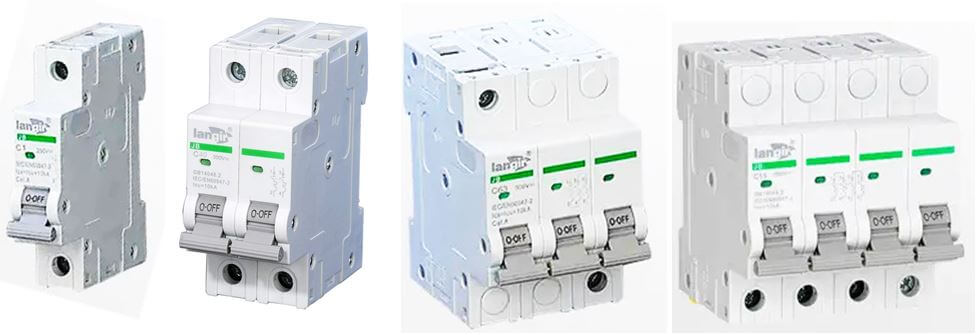
- Breaker types: Common options include miniature circuit breakers (MCBs) for low-current circuits and molded case circuit breakers (MCCBs) for higher-current or adjustable protection needs.
- Trip curves: Trip characteristics tell you how quickly a breaker reacts at different overload levels — essential for coordination with sensitive equipment.
- Standards: Look for compliance with standards such as IEC 60947-2 to ensure internationally recognized safety and performance.
Get a quote for custom DC circuit breakers from Langir
Breaker types and where to use them
- MCBs: Best for smaller, low-current DC circuits where compact protection is needed.
- MCCBs: Fit higher-current applications and offer adjustable trip settings for tailored protection.
- Hydraulic magnetic breakers: Provide stable performance where high interrupting capacity and fast response are required.
Matching type to application reduces nuisance trips and improves system protection.
Trip curves and IEC 60947-2 — why they matter
Trip curves define time-to-trip behavior across current levels so you can coordinate protection and avoid unnecessary outages. Choosing breakers that meet IEC 60947-2 gives you confidence the device meets recognized test and safety criteria for industrial DC use.
Best practices for installation and maintenance
Correct installation and routine care keep DC breakers reliable over time.
- Installation: Follow the manufacturer’s recommended procedures, ensure secure connections, and mount breakers in locations suited to their ratings.
- Maintenance: Inspect periodically for wear, corrosion, and tightness of connections; perform functional checks per schedule.
- Safety: Always follow safe work practices and local regulations during installation and service.
Installing DC breakers in industrial and PV systems
- Consult the installation manual from the manufacturer before starting work.
- Mount breakers where they’re accessible for inspection and maintenance.
- Tighten and verify all electrical connections to prevent arcing and overheating.
These steps reduce failure modes and ensure safe operation.
Maintenance tasks that keep breakers dependable
- Routine inspections: Look for signs of wear, corrosion, loose terminals, or heat damage.
- Functional testing: Exercise and test breakers under controlled conditions to confirm correct operation.
- Cleaning: Keep the breaker and its enclosure free of dust and contaminants that could affect performance.
Consistent maintenance extends service life and reduces unexpected downtime.
Why choose Langir’s JB Series and custom services?
Langir manufactures a wide range of DC circuit breakers, including the JB Series, built for solar and industrial environments. Our products are engineered for reliable protection, clear ratings, and compliance with relevant standards — with customization available for specific project needs.
Key features and certifications of Langir JB Series
- Safety certifications: Breakers are certified to international safety standards to ensure dependable operation.
- Technical specs: Available in a range of voltage and current ratings to suit diverse applications.
- Customization: The JB Series can be tailored to meet project-specific requirements for installers and engineers.
These advantages make Langir’s JB Series a practical choice when you need dependable DC protection.
How to request custom breakers and bulk orders from Langir
- Contact Langir: Get in touch through our official contact page to start the conversation.
- Share project details: Provide system specs, desired ratings, and quantities so we can prepare the right solution.
- Receive a quote: We’ll respond with a detailed proposal and lead-time estimate tailored to your needs.
Working with Langir ensures access to both standard products and tailored solutions supported by technical guidance.
How to Calculate DC Circuit Breaker Size | FAQs
Get a quote for custom DC circuit breakers from Langir
What common mistakes should I avoid when sizing DC circuit breakers?
Typical mistakes include underestimating short-circuit current, overlooking continuous-load sizing, and ignoring site-specific derating factors (temperature, conductor length, etc.). Failing to follow NEC or manufacturer instructions can also lead to nuisance trips or insufficient protection. Always verify calculations and consult product datasheets.
How often should DC circuit breakers be inspected and maintained?
Inspect DC breakers at least annually under normal conditions; increase inspection frequency for harsh environments or heavy cycling. Routine checks should include visual inspection, torque verification on terminals, and periodic functional testing to confirm proper operation.
What happens if I use the wrong size DC circuit breaker?
An undersized breaker will trip under normal conditions and cause unnecessary downtime. An oversized breaker may not clear faults promptly, risking equipment damage and safety hazards. Correct sizing balances protection and availability.
Can DC circuit breakers be used in AC systems?
No — DC circuit breakers are engineered for direct current and use arc-extinguishing and contact designs specific to DC. Using a DC breaker in an AC system (or vice versa) can compromise protection and may violate standards. Choose the correct type for the application.
What factors influence breaker selection for solar PV systems?
Key factors include the PV string or array maximum current, inverter limits, system Voc, temperature and derating factors, and the required interrupting capacity. Compliance with NEC and local codes is also essential.
How do environmental conditions affect DC breaker performance?
Temperature, humidity, dust, and corrosive atmospheres can affect breaker ratings and long-term reliability. High ambient temperatures may require derating; moisture can promote corrosion. Specify breakers rated for the installation environment and follow enclosure and ventilation guidance.
What role do trip curves play in selecting a DC circuit breaker?
Trip curves describe how quickly a breaker responds at different overcurrent levels. They are crucial for coordination with upstream and downstream protection and for protecting sensitive equipment. Pick a trip curve that matches the system’s inrush, overload, and fault characteristics.
Conclusion
Sizing DC circuit breakers correctly protects equipment and keeps systems running reliably — critical in solar PV and industrial settings. By calculating short-circuit current, checking Voc, and following NEC and manufacturer guidance (for example, the 1.25× rule for continuous loads), you can select a breaker that balances safety and availability. Langir’s JB Series and customization services offer flexible, certified solutions that make specifying and deploying DC protection straightforward. Explore our products or contact us to find the right breaker for your project.
 EN
EN  FR
FR  PL
PL  PT
PT  ES
ES  JA
JA  RU
RU  AR
AR  IT
IT  NL
NL  TR
TR  KO
KO  DE
DE