EN
EN

Knowing how AC (Alternating Current) and DC (Direct Current) circuit breakers behave differently is essential for safe, efficient electrical systems. This guide walks through the core distinctions between AC and DC power, how breakers interrupt each type of current, and what that means for industrial use. Choosing the wrong breaker can cause safety issues and downtime — here we’ll help you understand the practical differences, design implications, and how to pick the right breaker for your application. Topics include current behavior, breaker operating principles, load capacity, and real-world uses across industries.
Research consistently highlights that voltage rating is a key classification point — and that understanding these categories matters when specifying protection devices.
AC vs. DC Circuit Breaker Applications & Classification
A recent review summarizes how circuit breakers in power transmission and distribution are grouped by system type — AC or DC — and, crucially, by voltage rating. The paper notes that while DC breakers (mechanical, solid‑state and hybrid) are widely used in domestic and industrial DC systems and in HVDC protection, the literature often stops short of mapping each breaker type clearly to its ideal application. AC breakers are typically categorized by high‑ and low‑voltage use.
Applications of various types of circuit breakers in electrical power systems: a review, PI Obi, 2021
What Are the Fundamental Differences Between AC and DC Electricity?
The main difference is direction. AC reverses direction periodically; DC flows in one direction only. That simple distinction changes how devices behave and how protection must be engineered — so breakers for AC and DC are not interchangeable by default.
Get a quote for custom DC circuit breakers from Langir
How Do Alternating Current and Direct Current Differ in Flow and Characteristics?
AC and DC have different waveforms and practical strengths. AC cycles back and forth — usually at 50 or 60 Hz depending on your region — which makes long‑distance transmission practical. DC holds a steady voltage and current, which is ideal for batteries, electronics and many renewable setups. AC voltages are typically sinusoidal; DC is constant, and that steadiness affects switching and protection requirements.
Why Does Current Type Affect Circuit Breaker Load and Design?
Current type drives breaker design. AC breakers can rely on the waveform’s natural zero crossings to help extinguish arcs. DC gives no such pauses, so breakers need additional arc‑quenching measures. In short: DC demands dedicated design features to interrupt continuous current safely.
Because of these flow differences, conventional high‑power AC breakers usually can’t be used for DC without major redesigns.
High-Power DC Circuit Breaker Concepts & AC Limitations
Existing high‑power breakers were developed for AC and cannot reliably switch large DC currents without substantial changes. That gap has driven new concepts specifically for DC switching at high power levels.
Circuit breaker concepts for future high-power DC-applications, 2005
How Do AC Circuit Breakers Work? Design and Arc Extinguishing Principles
AC circuit breakers detect overloads and short circuits and then open contacts to stop current flow. Designers use several interruption techniques and mechanisms to ensure arcs are minimized and the system stays protected.
What Is the Role of Zero-Crossing in AC Arc Interruption?
Zero‑crossing is when the AC waveform passes through zero volts. Breaking the circuit near that moment reduces arc energy and makes interruption easier. That built‑in pause is a major reason AC switching is generally less demanding than DC switching.
Which Types of AC Circuit Breakers Are Common in Industrial Applications?
Common industrial AC breakers include miniature circuit breakers (MCBs), molded case circuit breakers (MCCBs), and air circuit breakers (ACBs). MCBs suit residential and light commercial loads. MCCBs and ACBs handle larger currents and offer features better suited to industrial panels and distribution systems.
What Makes DC Circuit Breakers Unique? Specialized Design for Continuous Current Protection
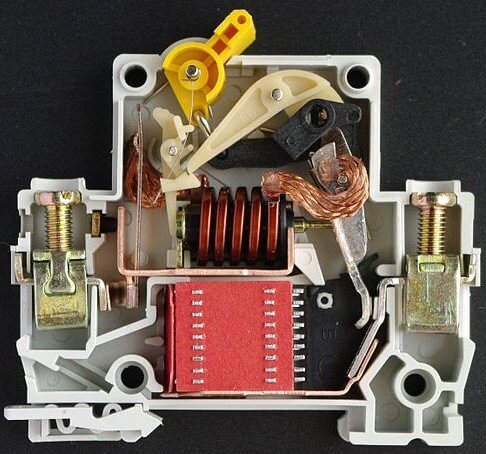
DC breakers are built to handle continuous current without the benefit of natural zero crossings. That requires tailored arc control and faster, more robust interruption strategies to keep systems and people safe.
Get a quote for custom DC circuit breakers from Langir
Why Is Arc Extinguishing More Challenging in DC Circuits? Magnetic Blowouts and Arc Chutes Explained
In DC, the arc can persist because the current never drops to zero. To manage this, designers use magnetic blowouts and arc chutes that lengthen, cool and steer the arc until it extinguishes. These methods reduce contact wear and prevent sustained arcing that would damage equipment.
High‑speed DC breakers rely heavily on their internal design and on circuit parameters (like inductance). Breaking DC can produce overvoltages, so both breaker design and the surrounding circuit matter for safe interruption.
DC High-Speed Circuit Breaker Performance & Overvoltage Challenges
High‑speed DC breakers (HSCBs) are key for overload, short‑circuit and shock protection in transport, power supply facilities and vehicles. Their current‑limiting performance depends on design choices and circuit characteristics such as inductance. Each DC interruption in an RL circuit can create overvoltages whose magnitude is tied to those parameters and the breaker’s construction.
AN EXPERIMENTAL ANALYSIS OF DC MAGNETIC BLOWOUT HIGHSPEED CIRCUIT BREAKERS’ PARAMETERS, 2020
What Are the Features and Benefits of Langir JB Series DC Circuit Breakers for Solar and Industrial Use?
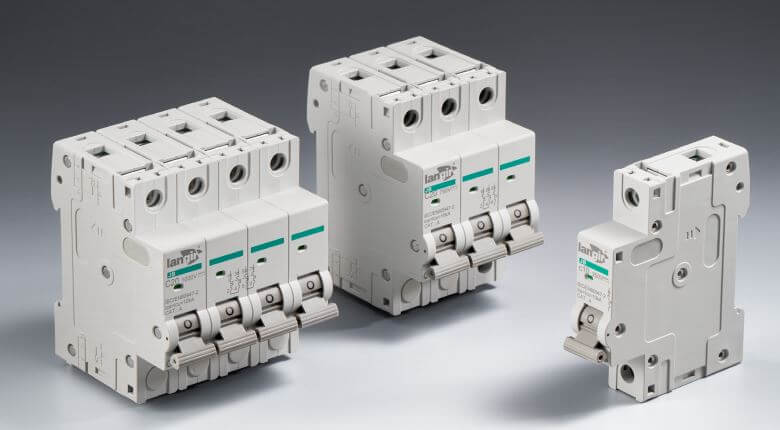
Langir’s JB Series is engineered for solar and industrial DC applications. The series combines compact form, strong breaking capacity and proven arc‑extinguishing technology — meeting international standards and making these breakers a practical choice for PV arrays, EV chargers and similar DC systems.
What Are the Key Differences in Load Handling and Performance Between AC and DC Circuit Breakers?
Knowing how load handling and performance differ between AC and DC breakers helps you specify the right device for the job and avoid safety or reliability issues.
How Do Arc Extinguishing, Voltage, and Current Ratings Differ Between AC and DC Breakers?
Arc control, voltage ratings and current ratings vary between AC and DC breakers. AC units take advantage of zero crossings; DC units employ more complex arc control. Because DC lacks natural current zeros, DC breakers are often rated for higher voltages at comparable currents. Always match ratings to your expected load and fault conditions.
What Are the Safety Risks of Using the Wrong Type of Circuit Breaker?
Installing the wrong breaker can cause serious hazards: sustained arcing, fires, equipment damage and risk to personnel. For example, an AC breaker used on a DC feed may fail to extinguish an arc properly. Always specify breakers for the current type and application to reduce these risks.
Where Are DC Circuit Breakers Applied in Industrial Manufacturing and Renewable Energy?
DC breakers are central to many industrial and renewable systems, protecting equipment and enabling safe maintenance and operation.
How Do DC Circuit Breakers Protect Solar Photovoltaic Systems?
In PV systems, DC breakers guard against overloads and short circuits and let technicians isolate panels from inverters during service or faults. Proper selection helps protect modules, inverters and downstream equipment.
What Is the Role of DC Circuit Protection in Electric Vehicle Charging and Battery Storage Systems?
DC protection is critical for EV charging and battery storage where continuous current is present. DC breakers interrupt faults to protect chargers, batteries and connected systems from damage.
How Are DC Circuit Breakers Integrated with Industrial Control Panels and Push Button Switches?
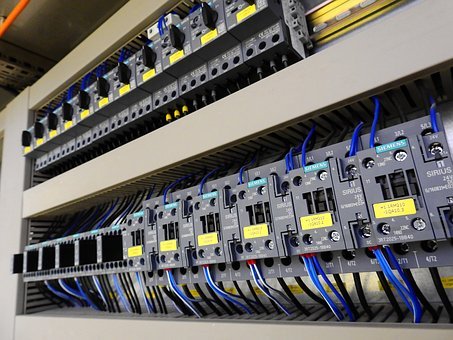
DC breakers are commonly mounted inside control panels and paired with pushbutton switches for local control and protection. This arrangement simplifies monitoring and lets operators isolate circuits quickly when needed.
How to Choose the Right Circuit Breaker for Your Industrial Needs? Selection Criteria and Standards Compliance
Picking the right industrial breaker requires weighing technical ratings and compliance so your system stays safe and code‑compliant.
Get a quote for custom DC circuit breakers from Langir
What Factors Should Industrial Buyers Consider: Voltage, Current, Breaking Capacity, and Trip Curves?
- Voltage Rating: Confirm the breaker is rated for your system voltage.
- Current Rating: Choose a breaker sized to carry your normal load without nuisance trips
- Breaking Capacity: Ensure the breaker can interrupt the maximum possible fault current.
- Trip Curves: Review trip characteristics so the breaker reacts properly to overloads and short circuits.
Why Is Compliance with IEC, EN, and GB Standards Essential for DC Circuit Breakers?
Compliance with IEC, EN and GB standards ensures DC breakers meet established safety, testing and performance benchmarks. Using certified products reduces risk and helps meet legal and insurance requirements — a must for manufacturers and installers.
For tailored advice on breaker selection, industrial integration, or project specifications, you can contact our experts for hands‑on support.
Are Circuit Breaker Loads Different Between AC and DC | FAQs
What are the common misconceptions about AC and DC circuit breakers?
A frequent mistake is assuming AC and DC breakers are interchangeable. They are not. AC breakers rely on waveform zero crossings; DC breakers need extra arc‑quenching strategies. Using the wrong type risks equipment failure and safety hazards.
How do environmental factors affect the performance of circuit breakers?
Temperature, humidity and dust all influence breaker reliability. High heat can accelerate wear, humidity can cause corrosion, and dust can impair moving parts. Select breakers rated for your environment and follow manufacturer guidelines for installation and enclosure type.
What maintenance practices are recommended for circuit breakers?
Regular inspections and tests keep breakers dependable. Check for wear, corrosion and loose connections; exercise trip mechanisms and clean contacts where recommended. Keep a maintenance log to track condition and schedule replacements before failures occur.
Can circuit breakers be retrofitted for different applications?
Some breakers can be adjusted or retrofitted (for example, trip settings), but swapping an AC‑rated breaker into a DC circuit is rarely safe. Always consult a qualified engineer to confirm suitability and compliance; often the best solution is a purpose‑built replacement.
What role do circuit breakers play in renewable energy systems?
Breakers are essential in solar and wind installations to protect equipment from faults and to allow safe isolation during maintenance. In PV systems, DC breakers protect the string level and provide a safe disconnect between panels and inverters.
How do you determine the appropriate breaking capacity for a circuit breaker?
Calculate the maximum prospective fault current based on system layout and sources, then select a breaker with a higher breaking capacity. An electrical engineer can model fault currents and recommend the correct rating for safe interruption.
What advancements are being made in circuit breaker technology?
Innovations include smart breakers with digital monitoring, remote operation and real‑time diagnostics, as well as material and design advances that improve arc control and allow higher voltage/current handling. These developments are helping modern grids and renewable systems become safer and more resilient.
Conclusion
Understanding how AC and DC circuit breakers differ is critical for safety and reliable operation. Recognize each type’s design limits and select protection that matches your system’s current type, voltage and fault conditions. Browse our range of AC and DC breakers designed for real‑world applications — or contact our experts for project‑specific guidance.
 EN
EN  FR
FR  PL
PL  PT
PT  ES
ES  JA
JA  RU
RU  AR
AR  IT
IT  NL
NL  TR
TR  KO
KO  DE
DE