EN
EN

Capacitive switches are transforming industrial control, sensing touch through subtle shifts in electrical charge rather than mechanical force. This guide will take you through the core principles of capacitance and electric fields that enable touch detection, explore the distinctions between self-capacitance and mutual-capacitance sensing, compare capacitive switches with traditional mechanical and piezo alternatives, and showcase their real-world impact on durability and hygiene. You’ll also discover how Langir engineers and customizes these switches for diverse industrial demands. By the end, you’ll possess a deep understanding of capacitive switching science and how to integrate tailored solutions into your factory or machine interfaces.
What Defines a Capacitive Switch and How Does It Sense Touch?
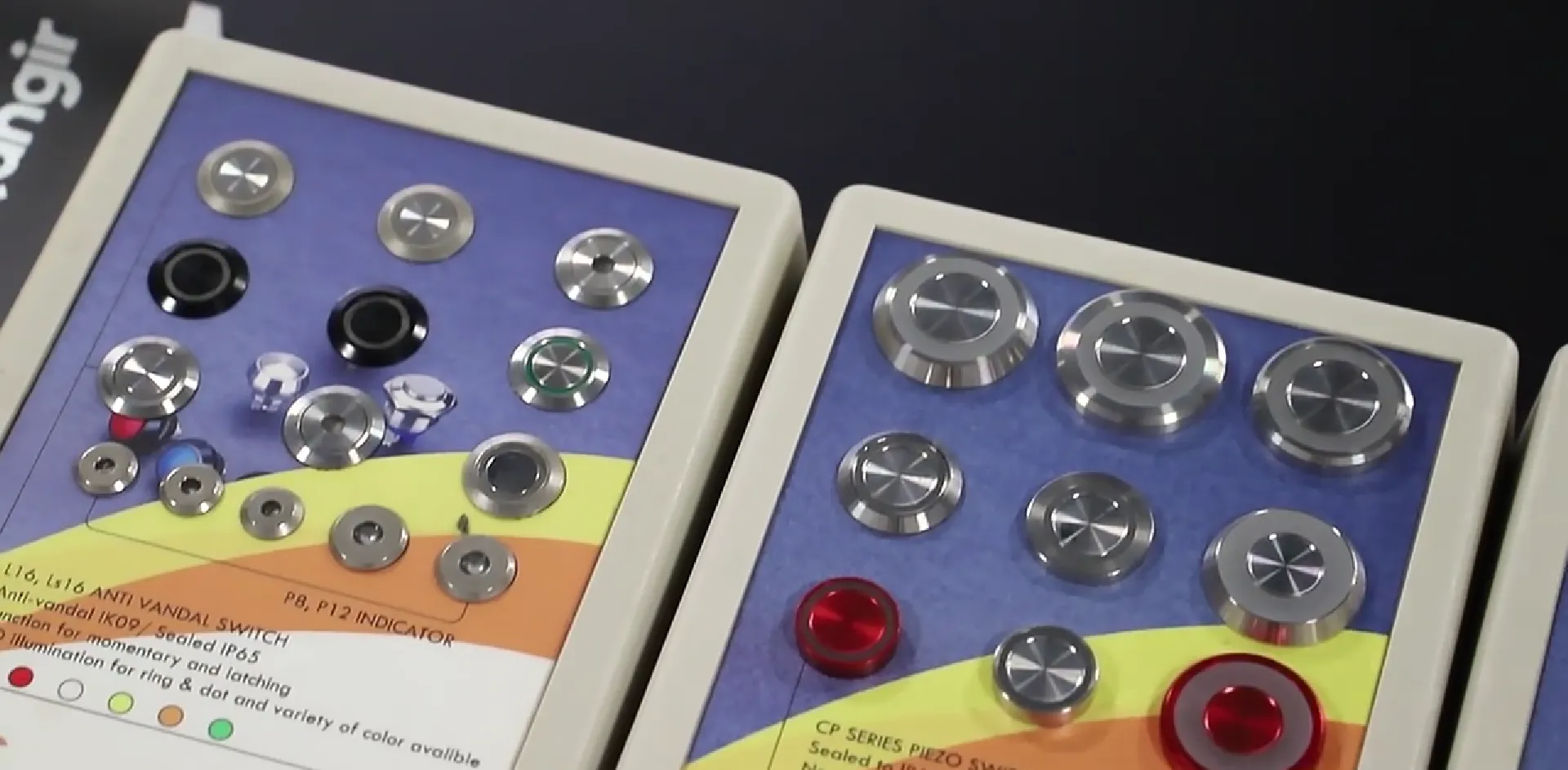
A capacitive switch is an advanced electronic control device that detects touch by measuring changes in capacitance, enabling non-contact actuation and superior reliability in demanding environments. When a conductive object enters the device’s electric field, the switch’s control circuitry registers a variation in stored charge, triggering an output. This solid-state design eliminates moving parts, significantly extending service life while maintaining high sensitivity for precise industrial control panels.
Get a quote for custom capacitive switches from Langir
Understanding Capacitance: Its Crucial Role in Capacitive Switches
Capacitance is the inherent ability of a system to store electrical energy as an electric charge between two conductive surfaces separated by a dielectric material. In capacitive switches, this stored charge level changes measurably when a finger or conductive tool approaches the switch surface. Monitoring these minute variations in capacitance provides the fundamental trigger mechanism, ensuring reliable touch-based activation without physical wear.
Capacitance and Touch Detection Explained
Capacitive switches leverage the principle of capacitance—the capacity of a system to store electrical energy—to detect touch. When a conductive object, such as a human finger, approaches the switch, it alters the existing electric field and changes the capacitance, thereby triggering the switch’s intended action.
Jones, A., “Capacitive Touch Sensing: Principles and Applications” (2022)
This foundational research offers critical insights into how capacitance is applied in touch-sensitive devices, directly supporting our explanation of capacitive switch operation.
How the Electric Field Enables Touch Detection in Capacitive Switches
An electric field is generated around the switch’s sensing electrode when a voltage is applied. This field extends into the surrounding area, creating a zone where an approaching conductive object will alter the field lines and the effective capacitance. The switch’s controller continuously monitors this field-induced capacitance, comparing it against a pre-calibrated threshold. Once this threshold shifts, the switch registers a valid touch event.
How a Human Finger Triggers a Capacitive Switch by Altering Capacitance
When a finger approaches the sensing surface, its conductive tissue effectively introduces a parallel capacitive path to ground. This additional path reduces the net impedance and increases the total capacitance. The controller detects this incremental capacitance boost and, if it surpasses the preset limit, interprets it as an intentional activation—executing the desired output action without requiring mechanical force.
Essential Components Within a Capacitive Switch
Capacitive switches rely on several critical components working in harmony:
- Sensing Electrode: The conductive element that generates the electric field.
- Dielectric Layer: A non-conductive material (like glass or plastic) that protects the electrode.
- Control Circuit: A microcontroller or ASIC responsible for measuring capacitance changes.
- Printed Circuit Board (PCB): Provides the mounting platform for electrodes and electronic components.
- Housing and Seal: An IP-rated enclosure designed for robust dust and moisture protection.
Each component significantly influences sensitivity, durability, and environmental resistance, setting the stage for our next discussion on sensing types.
Exploring Capacitive Sensing Types: Self-Capacitance vs. Mutual Capacitance
Capacitive switches utilize two primary sensing architectures—self-capacitance and mutual-capacitance—each optimized for specific detection requirements and industrial interfaces. Self-capacitance measures the charge variation of a single electrode, while mutual-capacitance detects changes between paired transmit and receive electrodes, enabling advanced features like multi-touch detection and superior filtering.

Get a quote for custom capacitive switches from Langir
Capacitive Sensing Architectures
Capacitive switches employ two primary sensing architectures: self-capacitance and mutual-capacitance. Self-capacitance measures the change in capacitance of a single electrode, whereas mutual-capacitance measures changes between paired electrodes, facilitating multi-touch detection and enhanced noise immunity.
Smith, B., “Comparison of Self-Capacitance and Mutual Capacitance in Touchscreen Technology” (2021)
This detailed study provides a comprehensive comparison of the two main types of capacitive sensing, directly relevant to our discussion on self-capacitance versus mutual capacitance.
How Self-Capacitance Sensing Operates in Capacitive Switches
Self-capacitance sensing employs a single electrode whose capacitance to ground increases when a conductive object enters its electric field. This simpler architecture excels in single-touch applications and offers minimal component cost, though it can be more susceptible to noise in environments with dense metal structures.
How Mutual Capacitance Enables Multi-Touch and Enhanced Detection
Mutual capacitance utilizes interdigitated transmit and receive electrodes. A finger disrupts the electrical coupling between these electrodes, causing measurable capacitance shifts. This method supports independent multi-touch detection, provides superior noise immunity, and allows for precise localization of multiple simultaneous inputs.
Advantages and Limitations of Each Capacitive Sensing Type
Below is a comparison of these sensing modes, crucial for industrial panel design:
Selecting the Optimal Capacitive Switch Type for Industrial Applications
- Medical devices: Mutual-capacitance is preferred for reliable multi-touch controls on sterilized panels.
- Automotive dashboards: Mutual architectures are ideal for gesture inputs and robust anti-noise filtering.
- Basic control panels: Self-capacitance is sufficient where single-point activation is the primary requirement.
Choosing the correct sensing type involves balancing performance, cost, and environmental challenges, which we will now explore in comparison to mechanical and piezo options.
Why Capacitive Switches Outperform Mechanical and Piezo Alternatives
Capacitive switches elevate industrial interfaces by offering superior longevity, hygiene, and design flexibility compared to traditional mechanical and piezoelectric switches. Their non-contact actuation eliminates moving parts, significantly reducing wear and potential failure rates.

Get a quote for custom capacitive switches from Langir
Enhanced Durability and Reliability of Capacitive Switches in Industrial Settings
Capacitive switches significantly boost reliability by eliminating mechanical contacts prone to wear or corrosion. With service lives often exceeding 50 million cycles and IK10 impact resistance, they minimize downtime and maintenance requirements in heavy-duty manufacturing or demanding outdoor installations.
How Capacitive Switches Deliver Superior Hygiene and Environmental Resistance
Sealed beneath robust glass or plastic surfaces, capacitive switches achieve IP65 to IP69K ingress protection ratings. Their impervious design supports rigorous washdowns, resistance to chemical exposure, and reliable operation in dust-filled atmospheres—making them critical for food processing or medical equipment.
Sensitivity and Design Advantages of Capacitive Switches
Adjustable sensitivity settings empower operators to fine-tune touch thresholds for both gloved and bare-hand use. Their slim profiles and customizable backlighting create sleek, intuitive control panels that seamlessly integrate into modern Human-Machine Interface (HMI) layouts.
When to Consider Mechanical or Piezo Switches Over Capacitive Options
Mechanical switches remain a viable choice where distinct tactile feedback is essential and cost sensitivity is paramount. Piezo switches excel in extremely low-temperature or vacuum environments. However, in most other industrial scenarios, capacitive switches offer improved uptime and hygiene without compromising responsiveness.
Capacitive Switches in Action: Industrial Applications
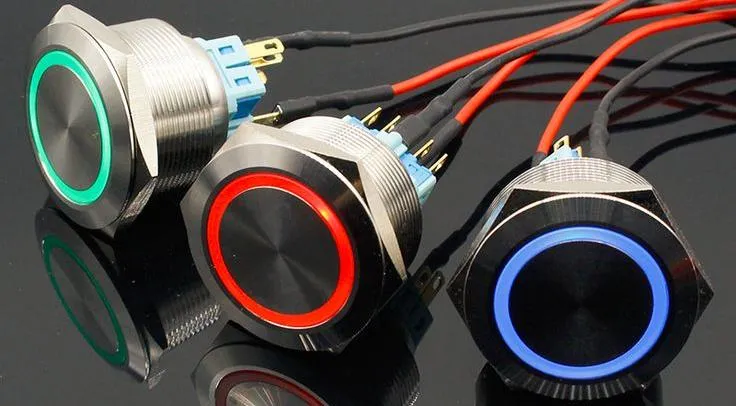
Capacitive switches are integral to a wide range of industrial sectors, from factory automation to medical diagnostics, by providing reliable, user-friendly interfaces that withstand rigorous conditions.
Get a quote for custom capacitive switches from Langir
Industrial Sectors Benefiting Most from Capacitive Switch Technology
- Manufacturing automation: Robust panels for robotics and conveyor system controls.
- Medical devices: Sterilizable touch inputs for advanced diagnostic equipment.
- Automotive: Dashboard and infotainment controls with advanced gesture capabilities.
- Food and beverage: Sealed, wash-down interfaces for processing lines.
How Capacitive Switches Enhance Control Panels and HMIs
By offering versatile backlight options, custom icons, and silent operation, capacitive switches significantly improve usability and aesthetic appeal. Their seamless surfaces simplify cleaning and reduce contamination risks, while consistent actuation enhances overall operator efficiency.
Real-World Case Studies: Demonstrating Capacitive Switch Benefits
In a notable automotive plant, replacing traditional mechanical buttons with capacitive switches resulted in an 80 percent reduction in panel replacements. Similarly, a medical device manufacturer achieved a 50 percent reduction in cleaning times by implementing fully sealed front panels, thereby improving patient safety standards and operational throughput.
Langir’s Customization Process for Industrial Capacitive Switches
Langir collaborates closely with OEMs to precisely tailor switch geometry, sensitivity levels, and IP ratings. From durable stainless-steel housings to bespoke legends and backlighting colors, Langir’s design team ensures each switch perfectly aligns with the client’s functional and branding requirements.
Langir’s Manufacturing and Customization Process for Industrial Capacitive Switches
Langir’s production process integrates precision CNC tooling, automated PCB assembly, and rigorous quality checks to deliver bulk and custom orders with uncompromising excellence.
Get a quote for custom capacitive switches from Langir
Customization Options for Capacitive Switch Design and Sensitivity
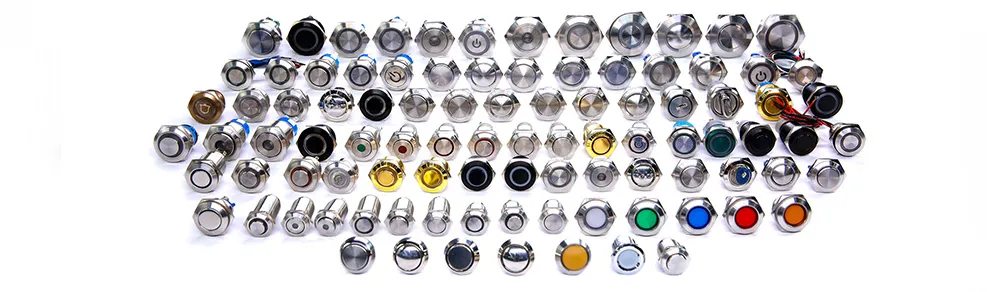
Clients can specify critical parameters such as button diameter, actuation force, backlighting color, engraving, and sensing thresholds. Langir’s extensive material palette includes stainless steel, aluminum, and polycarbonate overlays to precisely match diverse application demands.
Ensuring Durability and Quality in Langir’s Bulk Capacitive Switch Production
Every batch undergoes stringent IEC 60529 ingress testing, extensive cycle-life endurance trials, and salt-spray corrosion checks. Our ISO 9001 certified processes govern every stage of production, guaranteeing consistent, high-performance quality across all volume orders.
The Process for Ordering Customized Capacitive Switches in Bulk
Begin by clearly defining your panel requirements and environmental constraints. Next, review Langir’s prototype samples to ensure perfect fit and feel. Finally, approve production tooling and quantities—then place your order. To initiate this process, please contact our sales team for bulk orders or customization inquiries.
Key Technical Components and Materials in Capacitive Switches
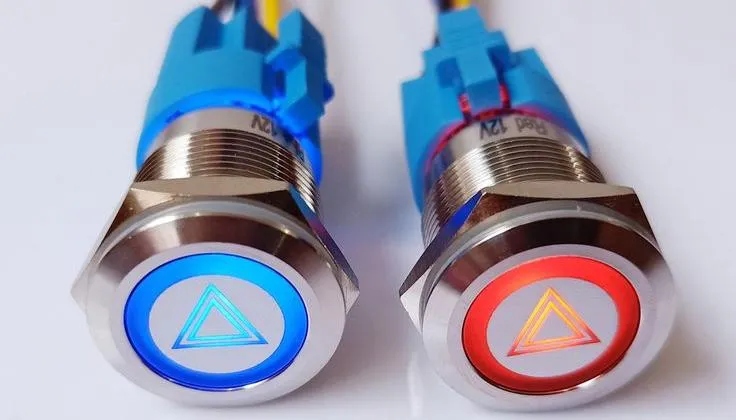
The optimal performance of capacitive switches hinges on the careful selection of electrodes, dielectric materials, and circuit substrates to achieve the ideal balance between sensitivity and environmental resilience.
Get a quote for custom capacitive switches from Langir
How Electrodes and Dielectric Materials Impact Capacitive Switch Performance
Electrode geometry (size and shape) directly determines the electric field penetration depth, while dielectric thickness and constant influence baseline capacitance and touch resolution. Glass dielectrics offer superior chemical resistance, whereas thin plastics enable ultra-low activation force.
The Role of PCBs and Flexible Printed Circuits in Capacitive Switch Functionality
Rigid PCBs provide stable mounting for control ICs and connectors, while flexible circuits offer designers the versatility to route electrodes under curved overlays or within confined panel spaces. Both formats support precise trace widths, crucial for optimized signal integrity.
Material Choices: Influencing Sensitivity and Environmental Resistance
High-permittivity dielectrics enhance sensitivity at lower voltages, and hydrophobic coatings effectively prevent moisture interference. Stainless-steel housings provide robust protection against impacts, while polycarbonate shells offer excellent resistance to UV radiation and chemical exposure.
Integrating Capacitive Switches with Modern Industrial Systems and IoT
Capacitive switches function as intelligent endpoints within networked automation systems, facilitating data-driven control and enabling predictive maintenance strategies.
Connecting Capacitive Switches to Industrial Control Systems and HMIs
Switch outputs typically interface via digital I/O, CAN, or RS-485 links to Programmable Logic Controllers (PLCs) and touchscreens. Standardized protocols streamline integration into SCADA and DCS architectures, enabling unified plant management.
Benefits of IoT-Enabled Capacitive Switches in Industrial Automation
IoT-capable switches provide real-time reporting of usage metrics, temperature, and vibration data to central dashboards. This continuous monitoring enhances predictive maintenance capabilities, significantly reduces unplanned downtime, and improves overall operator safety.
Customization Supporting Advanced Industrial and IoT Applications
Langir can embed microcontrollers and wireless modules directly into switch assemblies, creating turnkey sensors that feed data to machine-learning models. Customized firmware and secure connectivity options are meticulously aligned with cutting-edge Industry 4.0 strategies.
Capacitive switches leverage precise electric-field sensing to deliver highly reliable, long-lasting control solutions across diverse industries. By understanding the principles of capacitance, optimal electrode design, and various sensing modes, you can confidently select or customize the ideal switch for your specific environment. Langir’s unparalleled expertise in bulk production, stringent quality assurance, and flexible customization ensures your capacitive switches meet even the most demanding industrial requirements. Whether your needs involve sealed medical controls, advanced automotive dashboards, or smart IoT interfaces, capacitive technology fundamentally transforms human-machine interaction without compromising durability or performance.
 EN
EN  FR
FR  PL
PL  PT
PT  ES
ES  JA
JA  RU
RU  AR
AR  IT
IT  NL
NL  TR
TR  KO
KO  DE
DE