EN
EN

Imagine a control solution that harnesses pressure to generate power, engineered for unwavering durability — that’s the fundamental principle behind piezo switches and piezo triggers. As a leading manufacturer of bulk piezo switches and custom piezo trigger solutions, Langir understands how mastering their distinct electrical behaviors can revolutionize industrial control systems. This comprehensive guide will define the piezo switch, detail the operational mechanics of piezo triggers, compare their sensitivity and signal characteristics, outline optimal installation and integration strategies, assess their inherent advantages and limitations, provide expert guidance on device selection, and offer essential troubleshooting insights. By grasping these critical distinctions, you’ll be empowered to specify robust push button switches for large-scale deployment and unlock tailored customization possibilities for your most demanding industrial applications.
Understanding the Piezo Switch: Operation and Core Principles
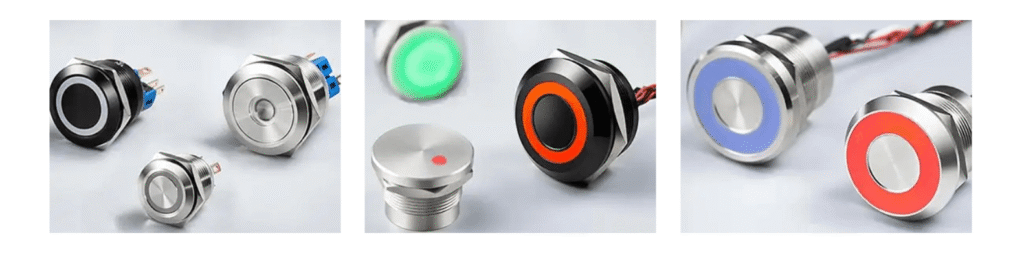
A piezo switch functions as a solid-state actuator, meticulously converting mechanical pressure into a precise electrical pulse via crystalline deformation. This innovative design ensures exceptional precision and an almost limitless mechanical lifespan. When force is applied to its piezoelectric element, the switch generates a distinct voltage spike, capable of driving sophisticated control electronics without relying on moving parts. This inherent robustness makes it the optimal choice for demanding industrial environments and critical long-life applications. Consider, for instance, the immediate, clean digital signal produced by pressing a sealed stainless-steel button on an outdoor kiosk, entirely free from wear-related degradation.
With this foundational understanding established, let’s delve deeper into its structural composition, operational mechanics, and prevalent industrial applications.
Get a quote for custom Piezo switches from Langir
Key Components of a Piezo Switch: An Overview
Piezo switches are engineered from several critical components, meticulously designed to collaboratively transform applied pressure into a reliable electrical output:
- Piezoelectric Element: The core ceramic disc or ring, engineered to generate voltage under mechanical stress.
- Actuator Housing: A robust, precision-machined stainless-steel or aluminum enclosure, designed for uniform force transmission.
- Conductive Backing: A specialized metal plate, securely bonded to the crystal, ensuring consistent and reliable signal acquisition.
- Terminal Contacts: Integrated electrical leads or pads, meticulously designed to route the generated pulse to the control circuitry.
Each of these components is integral to ensuring the switch’s exceptional longevity and repeatable performance, even under millions of actuation cycles, thereby defining its precise signal generation capabilities.
The Operational Principle: How Piezo Switches Generate Electrical Signals
- Pressure Application: External force precisely compresses the internal crystalline structure.
- Charge Displacement: This controlled deformation induces an immediate, internal charge separation within the piezoelectric material.
- Voltage Output: The resulting charge efficiently flows through the conductive backing, culminating in a distinct, brief voltage pulse.
This generated electrical burst can be precisely conditioned by integrated circuitry into a clean digital or analog signal, suitable for seamless integration with microcontrollers, PLCs, or advanced ignition systems. A thorough understanding of this pulse generation mechanism underscores why piezo switches are unparalleled in applications demanding precision controls and robust ignition modules.
The Piezoelectric Effect: Foundation of Signal Generation
Piezoelectric materials inherently generate an electrical charge when subjected to mechanical stress, a phenomenon universally recognized as the piezoelectric effect. This foundational principle is critical to the operational integrity of both piezo switches and piezo triggers, empowering them to efficiently convert mechanical energy into precise electrical signals or potent high-voltage pulses.
IEEE Standards Association, IEEE Standard on Piezoelectricity (2018)
This authoritative research provides the foundational understanding of the piezoelectric effect, which is indispensable for comprehending the sophisticated functionality of both piezo switches and triggers.
Common Industrial Applications of Piezo Switches
Piezo switches improve reliability and lifespan across diverse industrial settings:
- Robust factory floor control panels
- Weather-resistant outdoor kiosks and automated ticket machines
- Reliable marine navigation and communication equipment
- Demanding high-vibration environments (e.g., heavy-duty mining consoles)
The inherently sealed, solid-state design of piezo switches guarantees unwavering, consistent actuation in environments where dust, moisture, or severe shock would rapidly degrade conventional mechanical buttons. Acknowledging these critical use cases naturally transitions our focus to piezo triggers and their distinct operational characteristics.
Industrial Applications of Piezoelectric Technology
Piezoelectric switches and triggers are extensively deployed across a diverse range of industrial applications, primarily due to their unparalleled reliability and exceptional durability. These critical applications encompass robust factory floor control panels, resilient outdoor kiosks, and high-performance ignition systems, consistently demonstrating superior advantages over conventional mechanical switches.
International Society for Automation, Industrial Automation Handbook (2022)
This authoritative handbook offers invaluable insights into the practical, real-world applications of piezoelectric devices within demanding industrial settings, directly complementing our comprehensive discussion of their prevalent uses.
Piezo Triggers: Defining Their Functionality and Applications
A piezo trigger is a highly specialized, compact ignition or sensing module, leveraging piezoelectric crystals to generate potent high-voltage pulses for reliable spark generation or instantaneous actuation. This self-powered triggering mechanism operates entirely without the need for external batteries or inductive coils. Upon impact from a precisely engineered striker or hammer, the crystal undergoes rapid deformation, emitting a focused voltage spike capable of igniting gas or signaling a critical event. This robust action delivers unparalleled, maintenance-free performance for critical ignition systems and ensures precise, instantaneous triggering in advanced measurement devices.
Let’s now meticulously examine how these distinct modules diverge in their fundamental design, core operating principles, and typical industrial deployments.
Get a quote for custom Piezo switches from Langir
Design Distinctions: Piezo Triggers vs. Piezo Switches
- Integrated Hammer Mechanism: A precisely calibrated mechanical striker engineered to deliver controlled impact to the piezoelectric crystal.
- Voltage Multiplier Circuitry: Optional, yet critical, integrated electronics designed to optimize and shape the high-voltage output specifically for ignition applications.
- Robust Ignition Housing: A compact, meticulously insulated enclosure, rigorously rated for safe and reliable operation at elevated voltages.
Operational Mechanics: The Working Principle of Piezo Triggers
- Controlled Mechanical Impact: A precisely engineered, spring-loaded hammer delivers a swift, controlled strike to the piezoelectric crystal.
- Instantaneous Rapid Deformation: This sudden, focused mechanical stress instantaneously induces a significant high-voltage charge separation within the crystal.
- Efficient Spark Generation: The resulting high-voltage potential efficiently bridges a calibrated electrode gap, culminating in a powerful, reliable spark.
Key Applications of Piezo Triggers in Industrial Devices
- Reliable gas cooktop and barbecue ignition systems
- Critical life-safety flame detection and monitoring systems
- Precision non-destructive testing (NDT) sensors
- Robust portable arc-welding igniters
Technical and Functional Distinctions: Piezo Switches vs. Piezo Triggers
Piezo switches are meticulously optimized for precise control signal generation, whereas piezo triggers are engineered specifically for robust ignition or high-sensitivity sensing applications via potent high-voltage pulses. Their inherent sensitivity, rapid response times, distinct electrical outputs, and operational lifespans fundamentally diverge, influenced by specific crystal design and mechanical assembly. To facilitate a clear comparison of these critical attributes, refer to the following detailed tables.
A comprehensive comparison of sensitivity and response time is presented below:
The piezo switch’s optimized lower force range is ideally suited for precise fingertip control applications, whereas the piezo trigger’s significantly faster response time is engineered for efficient spark generation under high-impact conditions.
Next, we examine the critical differences in electrical output and signal waveform:
The substantially higher voltage output characteristic of piezo triggers is specifically designed to reliably bridge spark gaps, while piezo switches consistently deliver safe, logic-level pulses, perfectly suited for seamless integration with sensitive control electronics.
Installation and Integration: Distinguishing Piezo Switches and Piezo Triggers
The installation of a piezo switch typically involves straightforward panel mounting and standard low-voltage wiring, whereas piezo triggers necessitate specialized insulated housings and meticulous high-voltage routing. These distinct integration processes critically influence enclosure design, wiring schematics, and paramount safety considerations.
Typical Mounting Methods for Piezo Switches
- Standard panel cutout with secure retaining nut
- Versatile flush or raised bezel configurations
- Integrated, robust O-ring sealing for superior environmental protection
Integrating Piezo Triggers into Ignition and Triggering Systems
- Precision Impact Alignment: Meticulously positioning the striker mechanism to ensure consistent and optimal hammer strikes.
- Secure High-Voltage Lead Routing: Employing rigorously insulated cables for safe and reliable connection to spark electrodes.
- Critical Housing Sealing: Implementing robust dielectric barriers within the housing to prevent hazardous arcing to unintended surfaces.
Wiring and Circuitry Considerations for Each Device
Piezo switches necessitate specific wiring and circuitry considerations:
- Standardized signal wiring for seamless integration with microcontrollers or industrial relays
- Minimal external filtering or software-based debouncing, due to inherent signal clarity
Conversely, piezo triggers demand distinct electrical considerations:
- Robust, shielded high-voltage (HV) cabling, rigorously rated for applications exceeding 5 kV
- Precise ground reference connections to ensure safe and controlled spark paths
A thorough understanding of these critical installation distinctions is paramount for guiding designers toward optimal enclosure solutions and robust safety strategies.
Advantages and Limitations: Piezo Switches vs. Piezo Triggers
Piezo switches are engineered to deliver precise, reliable control with an exceptional operational lifespan, whereas piezo triggers provide powerful, self-contained sparks without requiring external power sources. Each device presents distinct trade-offs concerning initial cost, long-term durability, and optimal application scope.
A comparative analysis of durability and cost is provided below:
While piezo switches represent a moderate initial investment per unit, their precision and reliability make them indispensable for critical safety-line control circuits. Conversely, piezo triggers offer a cost-effective solution for ignition pulses, though they necessitate meticulous high-voltage handling protocols.

Get a quote for custom Piezo switches from Langir
Key Benefits of Piezo Switches in Industrial Control Applications
- Virtually maintenance-free operation, engineered for millions of actuation cycles
- Generation of clean, stable digital signals, significantly enhancing system reliability
- Exceptional resistance to severe shock, ingress of dust, and moisture
These inherent advantages collectively contribute to maximized uptime and significantly reduced downtime across demanding factory floor operations, thereby directly improving overall equipment effectiveness (OEE).
Considerations and Limitations of Piezo Triggers
- Necessitates robust insulation and precise spark gap design for safe operation
- Subject to higher mechanical impact stresses, which may influence ultra-high cycle count applications
- Not directly compatible with low-voltage logic interfaces without the integration of supplementary conditioning electronics
A meticulous balance of these design constraints is crucial to preventing premature failures in critical ignition or high-precision sensing modules.
Comparative Analysis: Cost and Availability
Piezo switches, while entailing a higher initial investment, deliver unparalleled control-grade performance and simplified integration, justifying their cost through enhanced system reliability. Conversely, piezo triggers maintain broad market availability at a lower unit cost, offering significant savings for high-volume, mass-manufactured ignition components.
Selecting the Optimal Solution: Piezo Switch vs. Piezo Trigger
The selection of the optimal device hinges critically on the specific control or ignition demands, anticipated environmental stresses, and inherent integration constraints of your application. We recommend evaluating these criteria with a prioritized approach:
- Precisely identify the required actuation force, desired voltage output, and specific signal type.
- Accurately match sensitivity requirements to either user ergonomics for control or critical ignition reliability.
- Thoroughly evaluate environmental sealing capabilities, vibration tolerance, and projected lifecycle expectations.
- Conduct a comprehensive comparison of total cost of ownership, encompassing enclosure design and wiring complexity.
- Strategically factor in customization possibilities, including miniaturization or the use of specialized materials.
A comprehensive understanding of these critical factors will unequivocally clarify whether a low-force control switch or a robust, high-impact ignition trigger represents the optimal solution for your project’s specific objectives. For large-scale bulk orders or highly specialized custom specifications, we invite you to visit our Langir Contact Page to explore our extensive range of solutions and discuss your unique requirements with our expert team.
Troubleshooting Guide: Piezo Switches and Piezo Triggers
Even with the most robust designs, operational anomalies can occasionally arise. Prompt and accurate diagnosis of these issues is paramount to rapidly restoring full functionality and mitigating costly operational downtime.
Identifying Common Issues with Piezo Switches
- Absence of Output Pulse: Systematically inspect for compromised wiring or unsecured terminal contacts.
- Intermittent Actuation: Thoroughly examine the piezoelectric disc for micro-fractures or the housing for any signs of deformation.
- Unintended False Triggers: Verify the integrity of grounding connections and implement appropriate, minimal signal filtering within the control firmware.
These systematic diagnostic procedures are designed to precisely pinpoint mechanical or electrical anomalies before they can escalate into critical system failures.
Troubleshooting Protocols for Piezo Triggers
- Diminished Spark Intensity: Verify the precise electrode gap distance and meticulously inspect the impact striker for signs of wear.
- Absence of Ignition: Rigorously test the high-voltage (HV) cable insulation and confirm that housing seals effectively prevent electrical leakage.
- Erratic or Inconsistent Pulses: Apply lubrication to the hammer mechanism strictly within manufacturer-specified parameters.
Prompt and effective resolution of these critical ignition issues is essential to maintaining the unwavering reliability of safety systems and industrial burners.
Strategic Replacement and Upgrade of Piezo Components
- Upon reaching specified operational cycle counts or when a measurable degradation in performance is observed.
- When transitioning to applications demanding resilience in higher temperature or aggressive chemical environments.
- Should evolving system requirements necessitate a change in signal integrity, such as a migration from analog to digital control protocols.
Piezo-based actuators inherently combine robust mechanical simplicity with powerful, precise electrical responses. Diligently applying these comprehensive troubleshooting steps will ensure their sustained, reliable operation for millions of actuation cycles.
Piezo switches and piezo triggers each contribute distinct, powerful strengths to advanced industrial controls and critical ignition systems, whether your objective is configuring a high-performance control panel or specifying a robust spark module. By meticulously matching sensitivity, electrical output, and inherent durability to your precise project requirements—and by leveraging Langir’s unparalleled expertise in bulk manufacturing and bespoke customization—you are empowered to deploy push button solutions that demonstrably enhance system reliability, significantly lower long-term maintenance costs, and elevate operational safety. We invite you to connect with our dedicated engineering team today to identify the optimal piezo solution tailored specifically for your demanding application.
 EN
EN  FR
FR  PL
PL  PT
PT  ES
ES  JA
JA  RU
RU  AR
AR  IT
IT  NL
NL  TR
TR  KO
KO  DE
DE