EN
EN

Whether a DC circuit breaker can be used in an AC circuit is more than a technical question — it affects safety, equipment life, and code compliance. Understanding how AC and DC breakers differ will help installers, engineers, and maintenance teams choose the right protection for each application. Below we explain the key differences, the hazards of mixing breaker types, and practical selection guidance. We also highlight Langir’s circuit protection products and customization services so you can find the right solution for your project.
What Are the Fundamental Differences Between AC and DC Circuit Breakers?
Both AC and DC breakers protect circuits from overloads and short circuits, but they are designed around different electrical behaviors. The way current flows — alternating versus direct — dictates the internal mechanisms, ratings, and interruption methods each breaker must use.
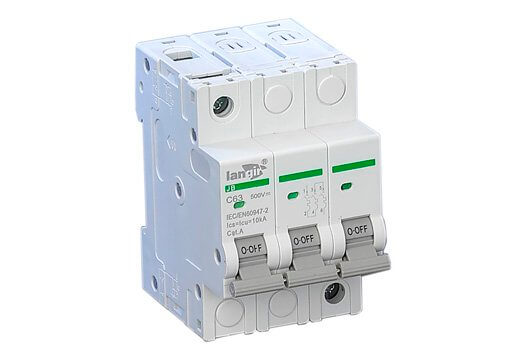
Get a quote for custom DC circuit breakers from Langir
In practice, breakers are usually classified by the type of current and voltage they’re rated for; however, published literature can be inconsistent about where application boundaries fall.
Classifying AC & DC Circuit Breakers for Power Systems
Circuit breakers are commonly classified by system type — direct current (DC) or alternating current (AC) — with voltage rating as a primary differentiator. Reviewed literature often does not clearly separate specific application limits for DC versus AC breakers across power networks.
Applications of various types of circuit breakers in electrical power systems: a review, PI Obi, 2021
How Do AC and DC Currents Differ in Electrical Systems?
AC (alternating current) reverses direction periodically, which provides natural zero crossings that help extinguish arcs. That makes AC well suited for bulk transmission and many building systems. DC (direct current) flows in a single direction and is common in batteries, solar arrays, and many electronic systems. Those fundamental differences shape component selection, protection strategies, and breaker design.
What Are the Distinct Arc Extinguishing Mechanisms in AC vs. DC Breakers?
AC breakers rely on the current’s zero-crossing to help interrupt arcs; DC has no such natural interruption, so DC breakers must use engineered solutions — e.g., magnetic blowouts, arc chutes, resistive elements, or hybrid techniques — to force arc extinction. Choosing the wrong type can compromise fault clearing and safety.
Because DC lacks a natural zero crossing, arc interruption is a key engineering challenge and requires different design approaches than AC.
DC Arc Extinguishing Challenges: No Zero Crossing
The absence of a zero-crossing point for DC arc current makes extinguishing the arc more difficult.
Investigation on arc behavior during arc motion in air DC circuit breaker, F Yang, 2013
Why Is Using a DC Circuit Breaker for AC Circuits Risky?
Installing a DC-rated breaker in an AC circuit can introduce operational and safety risks because the device may not be engineered to interrupt alternating waveforms or meet relevant AC ratings. These mismatches can lead to unreliable protection and increased hazard potential.
What Safety Hazards Arise from Misusing DC Breakers in AC Systems?
Misapplying DC breakers on AC systems can cause delayed fault clearing, sustained arcing, overheating, and in extreme cases, electrical fires. Since the breaker’s internal arc-control and timing are optimized for DC behavior, it may not interrupt AC faults as expected, creating unsafe conditions for people and equipment.
How Can Equipment Damage and Fire Risks Occur Due to Improper Breaker Use?
If a breaker fails to clear an overload or short promptly, conductors and equipment can overheat, degrading insulation and components and potentially igniting nearby materials. Persistent arcing can further damage contacts and enclosures. Selecting the correct breaker type and rating is essential to prevent these outcomes.
How to Choose the Right Circuit Breaker for Industrial and Solar Applications?
Picking the right breaker requires matching the device to the system’s electrical characteristics and operating environment. Consider voltage and current ratings, interruption capacity, DC/AC designation, environmental and mechanical constraints, and coordination with upstream and downstream protection.
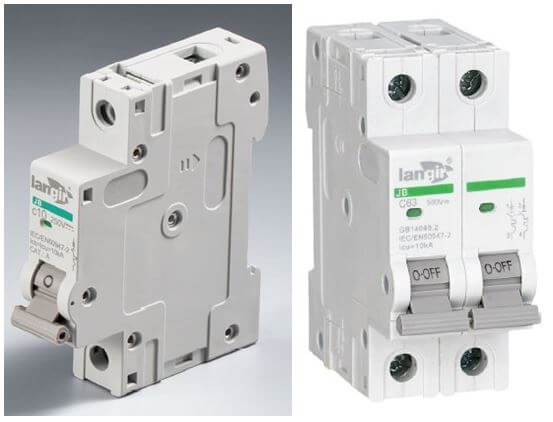
Get a quote for custom DC circuit breakers from Langir
What Factors Should Guide Circuit Breaker Selection for AC and DC?
Key selection factors include the system voltage, nominal and fault current levels, breaking capacity (kA or kAic), trip characteristics, ambient temperature and derating, mounting and bus compatibility, and whether the breaker is certified for AC, DC, or both. For DC systems, pay special attention to the DC breaking rating and arc-control features.
How Do Standards Like IEC 60947-2 Influence Breaker Compliance?
Standards such as IEC 60947-2 set the performance, testing, and marking requirements for low-voltage circuit breakers. Compliance demonstrates a product has been tested to operate safely under specified conditions. Always confirm that the breaker’s certifications and ratings match your application and local codes.
What Are Langir’s DC Circuit Breakers and Their Applications?
Langir supplies a range of DC circuit breakers engineered for renewable energy, industrial power, and other DC-heavy applications. Our focus is on reliable interruption, clear ratings, and practical installation features that simplify system design and operation.
What Features Define Langir’s JB Series DC Circuit Breakers?
The JB Series combines a rugged mechanical design with high interrupting capacity and international compliance. These breakers deliver overload and short-circuit protection, clear DC ratings, and form factors that integrate easily into solar arrays, battery systems, and industrial DC panels.
Which Industrial and Renewable Energy Systems Benefit from Langir’s DC Breakers?
Langir’s DC breakers are well suited to solar photovoltaic arrays, energy storage systems, EV charging stations, and DC bus applications in manufacturing. Wherever reliable DC fault interruption is required, properly rated Langir breakers help protect equipment and maintain uptime.
How Does Langir Support Custom Circuit Protection and Switch Solutions?
We offer tailored circuit protection and switching solutions to meet project-specific needs. From product selection to OEM customization, Langir works with clients to deliver components that fit technical and branding requirements.
What Customization Services Does Langir Offer for Circuit Protection Products?
Langir provides OEM design support plus customization for color, labeling, packaging, and product markings. These options let customers streamline installation, meet branding guidelines, and ensure components match system requirements.
How Can Bulk Purchasing and OEM Services Benefit Industrial Clients?
Bulk ordering and OEM services reduce unit cost, simplify procurement, and accelerate deployment for large projects. Langir’s customization and production capabilities help industrial clients scale faster while keeping quality and compliance consistent.
What Are Common Questions About Using DC Circuit Breakers for AC?
Below are answers to the most frequent concerns we hear about mixing breaker types and choosing the right protection for AC and DC systems.
Can I Use an AC Circuit Breaker in a DC System?
No — AC breakers are not generally suitable for DC systems. AC devices rely on the waveform’s zero-crossing to assist arc interruption; without that, an AC breaker may not extinguish the arc reliably. Always use breakers specifically rated and certified for DC when protecting DC circuits.
That guidance reflects a fundamental technical limit: AC breakers assume a natural zero crossing that does not exist in direct current applications.
Why AC Breakers Fail in DC: No Natural Zero Crossing
Traditional AC breakers are unsuitable for DC use because DC currents do not have the natural zero crossing present in AC systems.
Comparative analysis of hybrid DC breaker and assembly HVDC breaker, B Mitra, 2017
Why Are DC Circuit Breakers More Expensive Than AC Breakers?
DC breakers typically cost more because they require additional engineering and materials to manage continuous current and extinguish arcs without a zero-crossing. Specialized designs, more rigorous testing, and higher-performance components all add to the final price.
Can You Use a DC Circuit Breaker for AC | FAQs
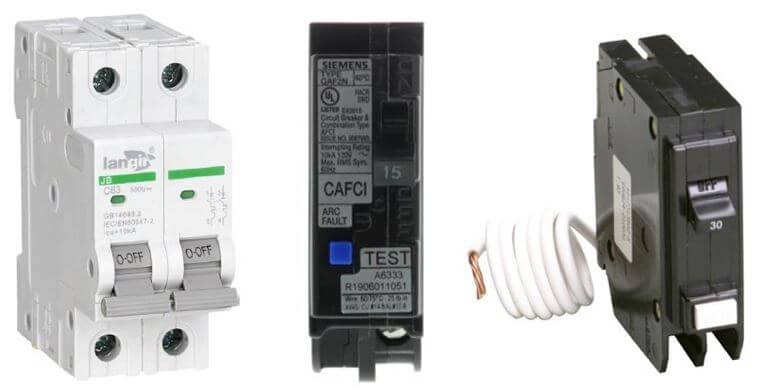
Get a quote for custom DC circuit breakers from Langir
What are the potential consequences of using a DC circuit breaker in an AC circuit?
Using a DC breaker on AC can lead to unreliable fault clearing, sustained arcing, overheating, and increased fire risk. Equipment may be damaged and installations can fall out of compliance with standards. The safe choice is a breaker rated for the circuit’s current type and voltage.
How can I identify the right circuit breaker for my specific application?
Match the breaker to the circuit’s type (AC or DC), system voltage, expected load, and maximum fault current. Check the breaker’s interrupting rating, trip curve, and certifications. When unsure, consult the manufacturer’s datasheets or a qualified electrician to verify correct selection and coordination.
What are the common signs that a circuit breaker may be failing?
Warning signs include frequent or unexplained tripping, buzzing or crackling sounds, warm or hot enclosures, visible discoloration or burn marks, and a burning smell. If you notice any of these, de-energize the circuit and have a qualified technician inspect or replace the breaker.
Are there specific regulations governing the use of circuit breakers in different applications?
Yes. International and regional standards (for example, IEC standards and the NEC in the U.S.) set requirements for ratings, testing, and installation. Local electrical codes may impose additional rules. Always verify that the selected breaker meets applicable standards for your jurisdiction and application.
What maintenance practices should be followed for circuit breakers?
Regular maintenance includes visual inspections, cleaning of dust and debris, checking for loose connections, thermal and operational testing, and exercising trip mechanisms per the manufacturer’s schedule. Proper maintenance preserves reliability and helps detect problems before they become hazards.
Can circuit breakers be repaired, or should they be replaced?
Because breakers are safety devices, replacement is typically the preferred option for significant faults or wear. Some minor issues — like resetting a tripped device — can be addressed on site, but damaged or degraded breakers should be replaced and evaluated by a qualified professional to ensure safety.
Conclusion
Selecting the correct breaker for AC or DC is essential for safety, reliability, and compliance. Use breakers rated for the circuit type, verify interrupting capacity and standards compliance, and follow proper installation and maintenance practices. For project-specific guidance or custom protection solutions, explore Langir’s product range and contact our team to find the right breaker for your system.
 EN
EN  FR
FR  PL
PL  PT
PT  ES
ES  JA
JA  RU
RU  AR
AR  IT
IT  NL
NL  TR
TR  KO
KO  DE
DE