EN
EN

In the world of industrial automation, where a single button can activate a million-dollar machine, reliability is not just a preference—it’s a necessity. Enter the panel mount switch: a dedicated electrical control device designed to be installed through a panel cutout, offering robust on/off or mode-selection functionality. In this guide, you’ll discover the components that make up these switches, the operation of push button variants, the variety of types and industrial applications, step-by-step installation best practices, key technical specifications, and how Langir’s custom services can streamline bulk orders and bespoke designs.
This article covers:
- What a panel mount switch is and how it functions
- The different switch types and selection criteria
- Core industrial and diverse applications
- A practical installation guide and troubleshooting tips
- Critical specifications like IP rating, voltage, materials, certifications
- Custom OEM/ODM services and bulk-buy advantages
- A clear comparison between panel mount and PCB mount switch methods
What Is a Panel Mount Switch and How Does It Work?
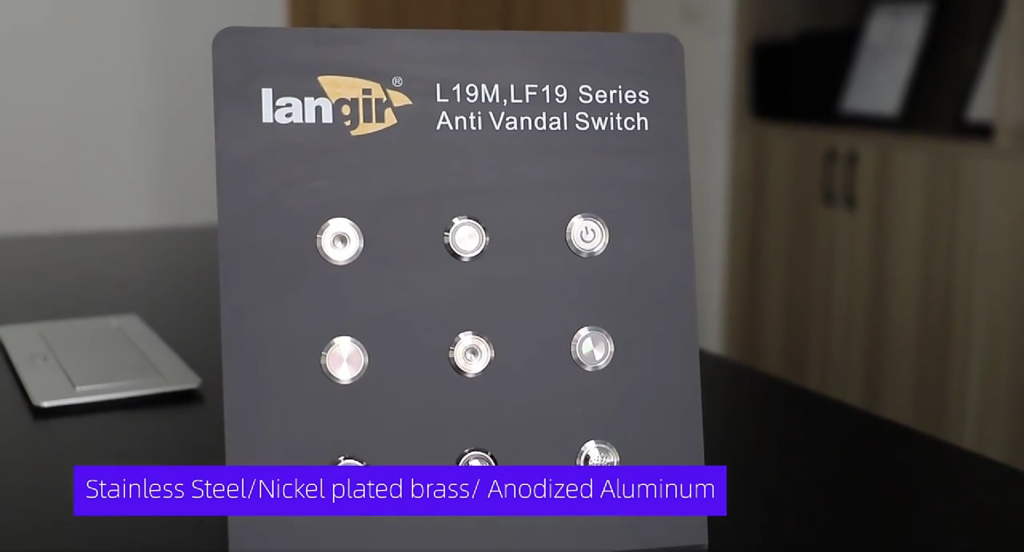
A panel mount switch is a rugged electrical interface device that provides reliable user control by anchoring through a panel and connecting via terminals, ensuring secure actuation and consistent signal transfer. This mounting method isolates the mechanism behind the panel while the actuator remains accessible, enhancing durability and user safety.
Get a quote for custom panel-mount switches from Langir
Key Components of a Panel Mount Switch
Here’s a breakdown of the essential parts that enable a panel mount switch to function and endure in industrial environments.
- Actuator: The movable part pressed or toggled to open or close the circuit.
- Bezel: The outer ring or frame that locks the switch into the panel cutout.
- Terminal: The electrical contacts where wires attach to the switch’s internal circuit.
Each component works in harmony to deliver dependable switching performance, setting the stage for selecting the right type for specific applications.
Operation of a Push Button Panel Mount Switch
A push button panel mount switch completes or interrupts an electrical circuit when the actuator is depressed, leveraging an internal spring mechanism and metal contacts to toggle states. This action converts mechanical force into a clear on/off or momentary signal, ideal for start/stop controls in machinery and automation.
Advantages of Using Panel Mount Switches in Industrial Settings
Panel mount switches offer high mechanical reliability, IP-rated protection against dust and moisture, and straightforward front-of-panel installation, enabling quick maintenance and minimal downtime. Their robust design supports repeated actuation cycles and harsh environments, laying the groundwork for diverse industrial uses.
Panel Mount Switch vs. Other Switch Types
Below is a comparison between panel mount and PCB mount switches, highlighting mounting, durability, and application differences.
This clear distinction helps you decide when to choose a panel mount solution over PCB mounting for industrial applications.
Types of Panel Mount Switches
Get a quote for custom panel-mount switches from Langir
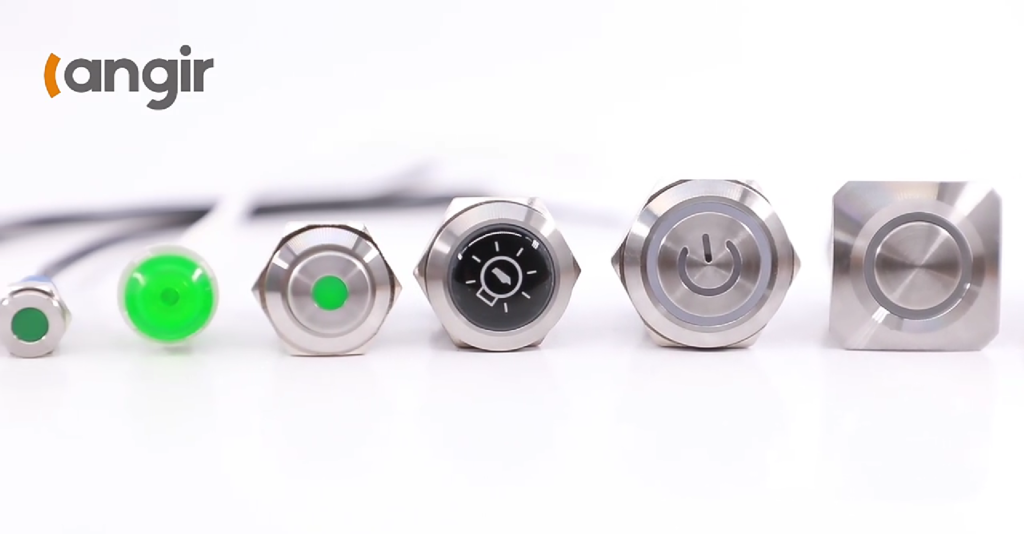
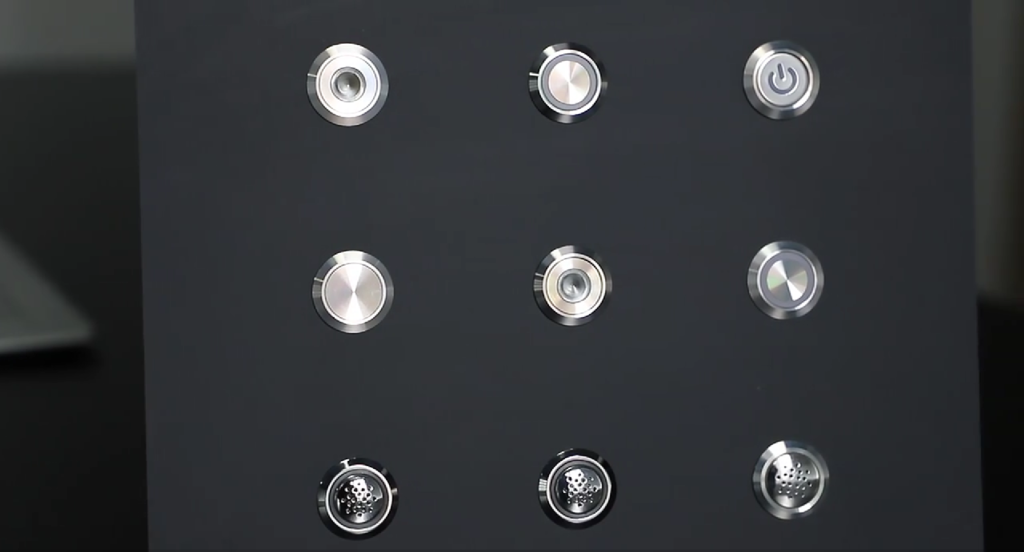
Push Button Switch Variations: Momentary, Latching, Illuminated, and Anti-Vandal
Panel push button switches come in several variations to suit control logic and environment demands:
- Momentary: Buttons return to their default position after release for pulse signals.
- Latching: Buttons stay in position until pressed again, offering on/off toggle.
- Illuminated: Buttons embed LEDs to signal status in low-light or process feedback.
- Anti-Vandal: Buttons use metal housings and IP67 protection for high-impact locations.
These options cover most industrial and public-facing interfaces, guiding your selection based on user interaction and site conditions.
Toggle, Rocker, Rotary, and Key Panel Mount Switches
Below is a concise breakdown of common panel switch types beyond push buttons.
Emergency Stop Panel Mount Switches and Their Uses
Emergency stop switches provide an immediate circuit break for safety-critical shutdowns in machinery and process equipment. They feature large mushroom heads, bright colors, and latching mechanisms that require a twist or pull-to-reset action, ensuring quick and unmistakable intervention during hazards.
Choosing the Right Type of Panel Mount Switch for Your Application
Selecting the ideal switch involves evaluating:
- Functionality demands: on/off, momentary, multi-position
- Environmental conditions: IP rating, temperature range
- Actuation style: push button, toggle, rocker, rotary, key
- User access: security requirements, anti-vandal features
- Electrical specs: voltage and current ratings
Mapping these criteria to your control panel needs ensures optimal performance and longevity.
Common Applications of Panel Mount Switches
Panel Mount Switches in Industrial Control Panels and Machinery
In industrial control panels, these switches serve as start/stop buttons, mode selectors, and indicator lights. Their panel-through design and sealed construction simplify maintenance and protect internal wiring, supporting continuous operation on assembly lines, CNC machines, and conveyors.
Panel Mount Switch Applications in Industrial Settings
Panel mount switches are crucial in industrial control panels and machinery, serving as start/stop buttons, mode selectors, and indicator lights. Their design and sealed construction simplify maintenance and protect internal wiring, supporting continuous operation in various industrial applications.
Industrial Automation Handbook (2022)
This source supports the article’s claims about the use of panel mount switches in industrial control panels and machinery.
Roles of Panel Mount Switches in Automotive, Marine, and Medical Devices
Automotive dashboards, marine control consoles, and medical equipment panels all benefit from IP-rated push buttons and key switches that resist corrosion, shock, and moisture. Their tactile feedback and status illumination are critical for operator confidence in demanding environments.
Panel Mount Switches in Access Control and Consumer Electronics
Access control systems use key, rocker, and illuminated push buttons to grant entry and signal lock status. Consumer appliances incorporate rocker and momentary buttons for user menus and power toggles, demonstrating panel mount reliability in daily-use devices.
Benefits of Customized Panel Mount Switches for Specific Applications
Tailored switch solutions align form, function, and environment requirements, resulting in:
- Precise cutout dimensions for seamless panel integration
- Custom legends, colors, or illumination for operator clarity
- Specialized materials and coatings for extreme conditions
Customized designs from Langir translate to better user experience and reduced system failures.
Installing a Panel Mount Switch: Step-by-Step Guide and Best Practices
Get a quote for custom panel-mount switches from Langir
Tools and Materials Needed for Panel Mount Switch Installation
To prepare for installation, gather:
- Drill or punch tool sized to mounting hole diameter
- Deburring tool or file for smooth panel edges
- Wire strippers, crimpers, and appropriate terminal connectors
- Screwdrivers or wrenches to tighten bezel and actuator
Measuring and Preparing the Mounting Hole for a Panel Mount Switch
Accurate hole preparation follows these steps:
- Mark the panel exactly with the switch’s cutout diameter.
- Drill a pilot hole before opening to full diameter for control.
- Use a step-drill bit or punch to reach the specified size.
- Deburr edges to prevent gasket damage and ensure a flush fit.
Proper hole preparation guarantees the bezel seals correctly, preparing the panel for reliable switch operation.
Wiring and Terminal Connection Guidelines for Panel Mount Switches
Effective wiring requires:
- Identifying common, normally open (NO), and normally closed (NC) terminals
- Using color-coded wires and appropriate gauge for the switch’s current rating
- Crimping or soldering connectors to maintain low-resistance paths
- Applying cable strain relief and routing wires to avoid mechanical stress
Following these guidelines preserves contact integrity and reduces the risk of failures.
Troubleshooting Common Installation Issues
If the switch fails to operate or leaks occur:
- Verify terminal tightness and correct wiring configuration
- Check gasket placement and bezel torque for proper sealing
- Inspect actuator travel for obstructions behind the panel
- Measure continuity with a multimeter to isolate faulty contacts
Systematic troubleshooting quickly restores full functionality and prevents recurring issues.
Technical Specifications to Consider When Selecting a Panel Mount Switch
Understanding IP Ratings for Panel Mount Switch Protection
Below is an overview of common IP ratings that indicate resistance levels to dust and water intrusion.
IP Ratings and Environmental Protection
IP ratings are essential for panel mount switches, indicating the level of protection against dust and water intrusion. For example, IP65 offers complete protection against dust and can withstand low-pressure water jets, while IP67 provides complete dust protection and can withstand water immersion up to 1 meter.
International Electrotechnical Commission (IEC) Standard 60529 (2021)
This citation provides the basis for understanding IP ratings and their importance in the context of panel mount switches.
Selecting the correct IP rating guarantees that the switch endures the specific environmental challenges of your installation.
Impact of Voltage and Current Ratings on Panel Mount Switch Performance
Voltage and current ratings define the electrical load a switch can safely handle. Exceeding these parameters risks contact welding or overheating, while under-rating may lead to premature wear. Match the switch’s ratings to your circuit’s operating conditions for safe, reliable performance.
Materials Used in Panel Mount Switches and Their Importance
Materials influence durability, corrosion resistance, and tactile feel:
- Stainless steel for high-impact or corrosive environments
- Brass with nickel plating for moderate robustness and conductivity
- Engineering plastics (e.g., PBT, PA66) for cost-effective, non-conductive options
Certifications Ensuring Quality and Compliance for Panel Mount Switches
Certifications like UL, CE, and RoHS demonstrate that switches meet international safety and environmental standards. These marks validate rigorous testing for electrical shock hazards, electromagnetic compatibility, and hazardous substance restrictions.
Mechanical Life Expectancy and Durability in Switch Selection
Mechanical life expectancy (cycles) indicates how many actuation operations a switch can perform before wear. Higher cycle ratings (e.g., 1 million vs. 100 thousand) translate to extended maintenance intervals and lower total cost of ownership in high-usage scenarios.
Enhancing Industrial Solutions with Custom Panel Mount Switch Services

Get a quote for custom panel-mount switches from Langir
Customization Options for Panel Mount Switches
Custom switch features include:
- Tailored actuator shapes, legends, and colors for intuitive operation
- Specific IP or NEMA ratings to match harsh environments
- Specialized materials or coatings for chemical resistance
- Integrated illumination colors and intensities for status feedback
Langir’s Support for OEM and ODM Custom Switch Production
Langir partners with clients from concept to production, offering in-house design review, rapid prototyping, mold creation, and volume manufacturing. This end-to-end support accelerates time to market for tailored switch solutions.
Benefits of Bulk Purchasing Customized Panel Mount Switches
Ordering customized switches in bulk delivers:
- Significant unit cost reductions through economies of scale
- Consistent performance across large‐scale installations
- Streamlined supply chain management and inventory control
- Priority production scheduling for recurring orders
Requesting a Custom Quote or Technical Support for Panel Mount Switches
To discuss your custom switch requirements, design options, or bulk pricing, please Contact Us. Our technical team provides prompt quotes and expert guidance tailored to your industrial applications.
Differences Between Panel Mount and PCB Mount Switches
Impact of Mounting Methods on Switch Installation and Application
Panel mount switches insert through a panel cutout and secure with a bezel, isolating the mechanism behind the surface. PCB mount switches solder directly onto circuit boards, saving space but limiting environmental protection and field-serviceability.
Advantages and Limitations of Panel Mount vs. PCB Mount Switches
- Panel Mount Advantages: Superior durability, IP/NEMA sealing, front-of-panel accessibility
- Panel Mount Limitations: Requires panel cutout, larger footprint
- PCB Mount Advantages: Compact size, simplified board assembly
- PCB Mount Limitations: Lower ruggedness, challenging field replacement
Choosing a Panel Mount Switch Over a PCB Mount Switch
Select a panel mount switch when you require:
- High ingress protection against dust, water, and chemicals
- Frequent field replacement or serviceability
- Clear user interface on an exposed panel surface
In compact, sealed electronics where environmental exposure is minimal, PCB mount switches may be preferred for space efficiency.
Panel mount switches deliver reliable, durable control solutions across industrial, automotive, marine, and consumer applications. By understanding component anatomy, operation principles, type variations, application contexts, installation best practices, and critical specifications, you can specify the ideal switch for any project. With Langir’s custom OEM/ODM services and bulk order support, your control panel will meet rigorous performance and quality demands while optimizing cost and delivery timelines.
 EN
EN  FR
FR  PL
PL  PT
PT  ES
ES  JA
JA  RU
RU  AR
AR  IT
IT  NL
NL  TR
TR  KO
KO  DE
DE